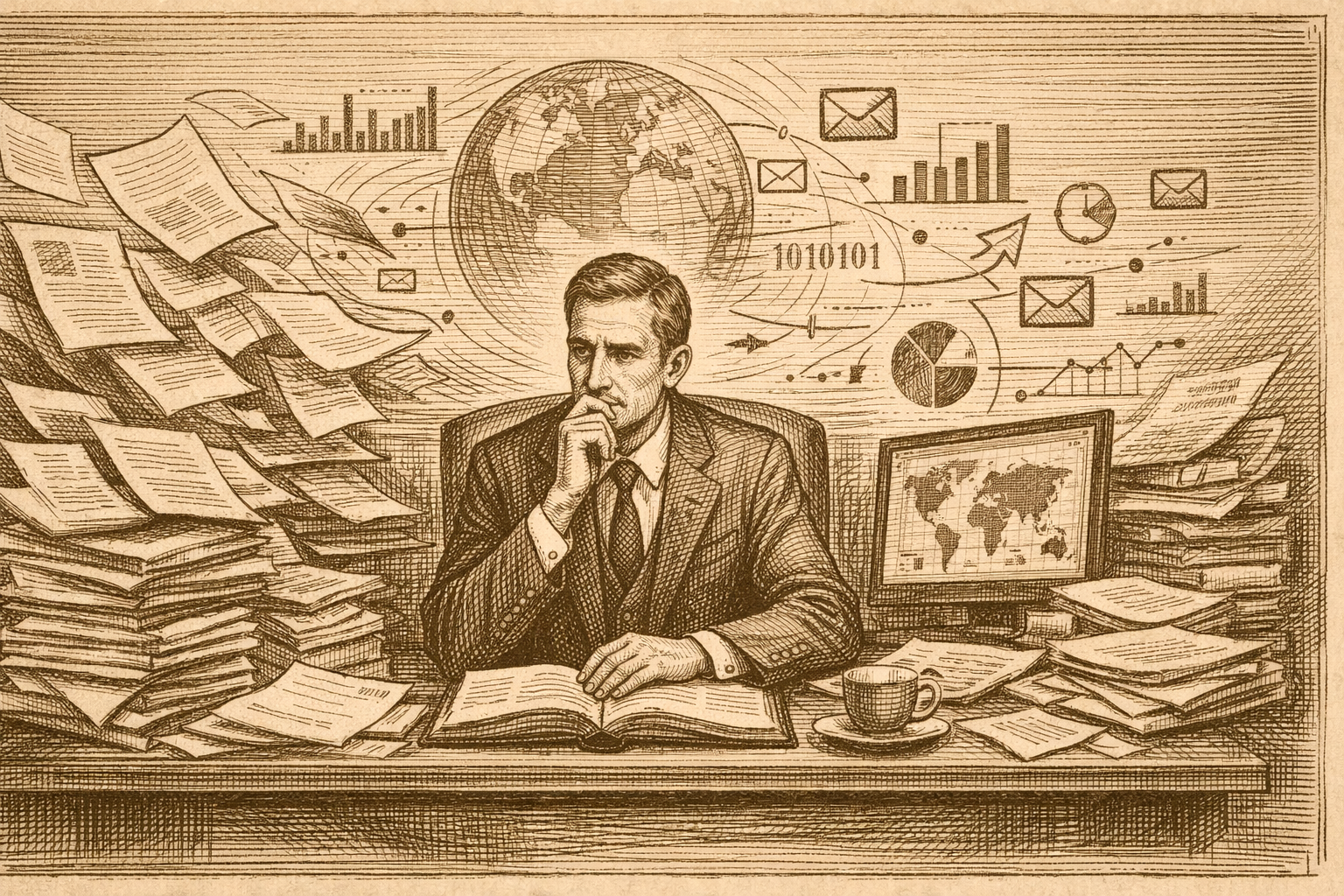
For much of modern management history, leadership was synonymous with control. Leaders were the architects of direction, the enforcers of systems, and the ultimate monitors of performance. In this era, control implied competence, and predictability was the benchmark of strength.
Today, that model is quietly crumbling. Across industries, leaders are finding that control is becoming harder to maintain—not because they are less capable, but because our environments have become too dynamic, interconnected, and unpredictable for just rigid oversight.
So to say, leadership isn’t disappearing; it is evolving from the role of a Chess Player (moving static pieces) to a Gardener (cultivating an ecosystem).
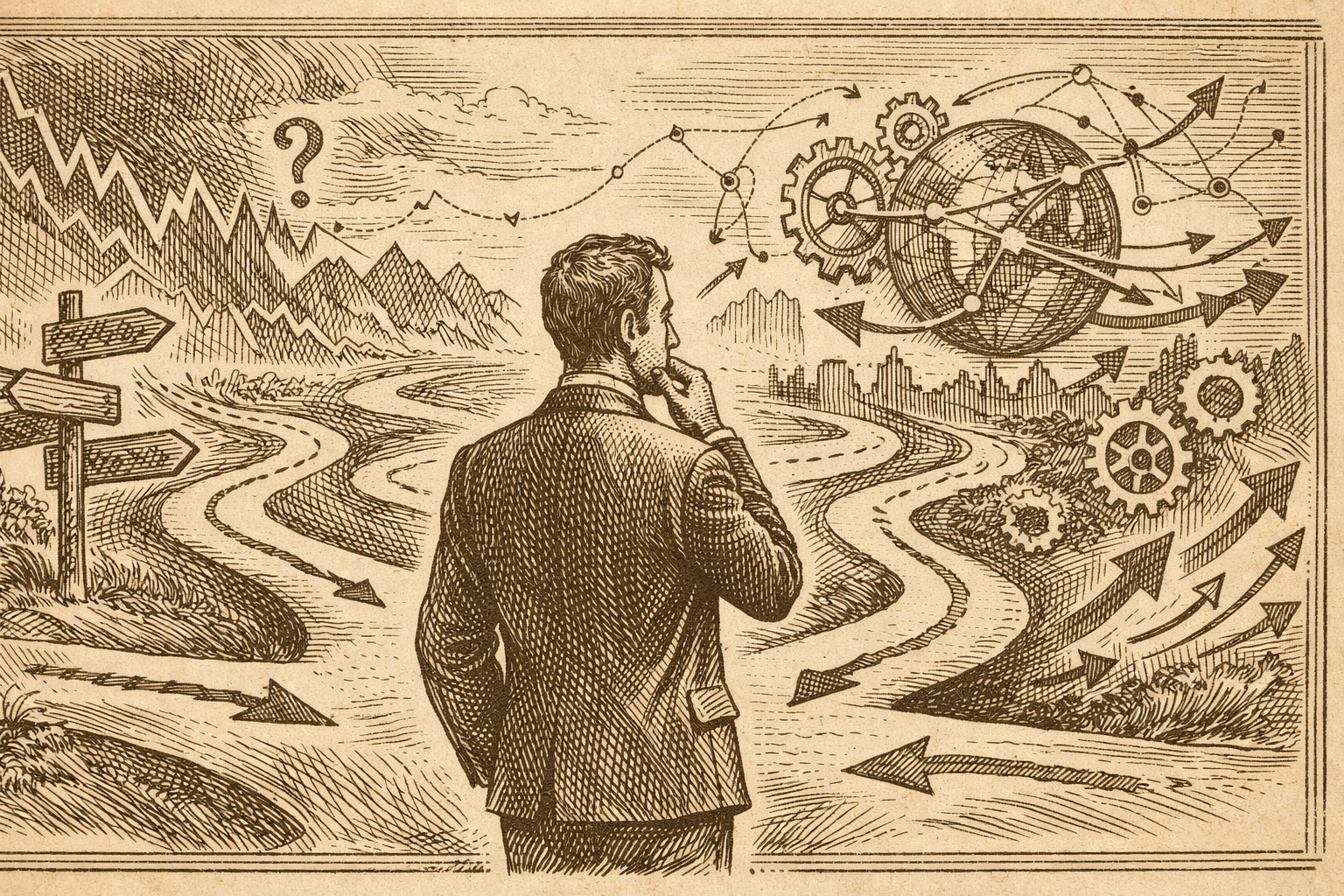
From Control to Adaptation
Traditional leadership models were built for relatively stable environments. Plans could be developed over longer horizons, assumptions remained valid for extended periods, and execution followed a structured path.
However, when conditions change rapidly, rigid control becomes a limitation.
Leaders today must continuously adjust to a few fundamental aspects. These may include, shifting market conditions, evolving technologies across the horizon, regulatory changes, and global uncertainties.
As we see in today’s growing global uncertainty, the pace and overlap of change reduce the effectiveness of fixed plans. Therefore, strategic adaptation, rather than traditional control, is becoming the defining capability.
Traditional models were built for stable horizons. However, when conditions shift overnight, rigid control becomes more a liability, than an asset.
Consider Nokia in the mid-2000s. They had an incredibly disciplined, controlled process for hardware manufacturing. However, they did not adapt to the software-driven shift led by the iPhone, or Google Android. Perhaps, their “fixed plan” for hardware dominance became their blind spot.
Leaders today must view adaptation as their defining capability. As seen in the global response to the 2020 pandemic, the organizations that survived weren’t those with the “best” pre-existing plans, but those that could pivot their entire supply chain in weeks.
Why Control Is Failing
Several structural shifts have made the “command and control” leadership-style obsolete. We discuss here a few important aspects.
- Increased Complexity: Decisions now have global ripple effects.
- Accelerated Information: Data moves instantly, but “sense-making” takes time.
- The Uncertainty Gap: As explored in modern decision-making, having more information often leads to more uncertainty, not less.
Supply Chain Fragility. In 2021, a single ship stuck in the Suez Canal disrupted global trade for weeks. No single CEO could “control” that variable; they could only navigate the fallout through real-time adjustments.
The Illusion of Perfect Planning
So, planning remains essential, but its role is changing.
In stable conditions, planning could approximate reality. Today, plans often become outdated quickly. Assumptions that were valid at the start of a project may no longer hold midway through execution.
This does not make planning irrelevant. It makes it provisional.
Leaders must now treat plans as starting points, not fixed paths. They should use it as a framework for action, not a guarantee of outcome. Therefore, the ability to revise plans becomes as important as the ability to create them.
Therefore, we may safely assume that in a stable world, a plan is a map. In a volatile world, a plan is merely a compass.
NASA’s Apollo Program vs. SpaceX. NASA traditionally used “waterfall” planning—linear, highly controlled, and incredibly expensive. SpaceX uses iterative “provisional” planning: they launch, they often explode (fail), they gather data, and they revise the plan for the next launch within weeks.
Leaders must now treat plans as starting points, not guarantees. The ability to “unlearn” a plan is now as vital as the ability to create one.
The Role of Systems Thinking
As environments become more interconnected, isolated decisions are less effective.
Leaders must understand how these different elements interact. It requires sencere systems thinking to understand how the policy matters influence markets, how technological aspects reshapes work, and how global events affect local outcomes
For example, as seen in how governments are intervening more in markets, policy decisions can directly impact business strategy and operational choices.
Systems thinking allows leaders to anticipate interactions rather than react to isolated events.
Therefore, isolated decisions no longer work because every action is part of a larger web.
Take the example of Central Banks and Inflation. When the Federal Reserve adjusts interest rates, it isn’t just a “finance” decision. It impacts housing, global emerging markets, and even geopolitical stability. Leaders who don’t use Systems Thinking find themselves ‘fixing’ one problem in ‘fire-fighting’ mode only to create three new ones elsewhere.
Distributed Decision-Making: The End of the Bottleneck
We have witnessed from different real-life scenarios that in complex environments, centralized control becomes a bottleneck.
Organizations are increasingly relying on distributed decision-making, that comprise of 1] empowering teams closer to the problem, 2] decentralizing operational decisions, and 3] maintaining alignment through shared principles.
This ground-rooted approach improves managerial and leadership responsiveness while preserving coherence among many aligned and conflicting situations.
However, it also requires trust—both in people and in processes.
So to reiterate, in complex environments, centralized control may become a bottleneck. To move fast, you must push power to the “front-line edges” of the organization.
The Haier Group (Rendanheyi Model). This global appliance giant dissolved its middle management and transformed into 4,000 “micro-enterprises.” Each team acts as its own startup, responding directly to customer needs without waiting for “control” from the home office.
This requires a fundamental shift: Trusting the process more than the person at the top.
As General Stanley McChrystal famously noted in his transition from traditional military command to modern organizational theory: “In a world of high complexity, the ‘Commander-in-Chief’ must become the ‘Communicator-in-Chief.’ You don’t manage the people; you manage the connections between them.” This shift is the cornerstone of distributed decision-making.
The Balance: Stability vs. Flexibility
We see organizations are increasingly relying on distributed decision-making. Across the domain, we find that they are empowering teams closer to the problem, many are decentralizing operational decisions in order to maintain alignment through shared principles across organization.
This approach improves responsiveness while preserving coherence. However, it also requires trust—both in people and in processes.
Adaptation is not chaos. Effective leadership is about “Fixed Stars and Fluid Paths.” You keep the purpose (the Star) stable, while keeping the execution (the Path) flexible.
Patagonia is the ultimate example of Stability in Purpose vs. Radical Flexibility in Execution. While most corporations are beholden to quarterly earnings, Patagonia restructured its entire existence to serve a single “Fixed Star.”
- The Stability (The Purpose): In 2022, founder Yvon Chouinard transferred 100% of the company’s voting stock to the Patagonia Purpose Trust. This ensures the company can never be taken public or sold to a buyer who might pivot away from environmentalism. Their stability is literal—it is written into their legal DNA.
- The Flexibility (The Tactics): Because their purpose is stable, they can be “unconventional” in ways that would terrify a traditional CEO:
- Anti-Growth Tactics: They famously ran the “Don’t Buy This Jacket” ad campaign during Black Friday. By discouraging unnecessary consumption, they built deeper brand loyalty, resulting in long-term revenue growth despite telling customers to buy less.
- Circular Economy: They launched Worn Wear, a massive secondary market for used Patagonia gear. Instead of only selling new products (the traditional model), they adapted to a service model—repairing over 100,000 items per year to extend product life.
- Supply Chain Agility: They were among the first to pivot entirely to organic cotton in the 1990s, despite a 20% increase in costs and massive supply chain disruption at the time. They viewed the “how” (the cotton) as flexible, but the “why” (reducing pesticides) as non-negotiable.
What This Means for Young Leaders
In the coming years, for the next generation of leaders, the “Hero Leader” myth is dead. You will not win by having all the answers or maintaining the tightest grip. Rather you will win by:
- Navigating Ambiguity: Being comfortable not knowing the “end” at the “beginning.”
- Continuous Feedback: Building loops where the truth reaches you faster than the praise.
- Alignment over Assignment: Inspiring people toward a shared direction rather than assigning them a rigid task.
We can safely say that the leadership is no longer the art of preventing surprises; it is the discipline of being prepared to be surprised.
Key Takeaways
- Traditional control-based leadership models are becoming less effective in dynamic environments.
- Increasing complexity and uncertainty are driving the need for adaptive leadership.
- Planning remains important but must be flexible and revisable.
- Systems thinking is essential to understand interconnected challenges.
- Effective leaders balance stability of purpose with flexibility in execution.
Leadership is not becoming weaker. It is becoming more responsive to the realities of a changing world.