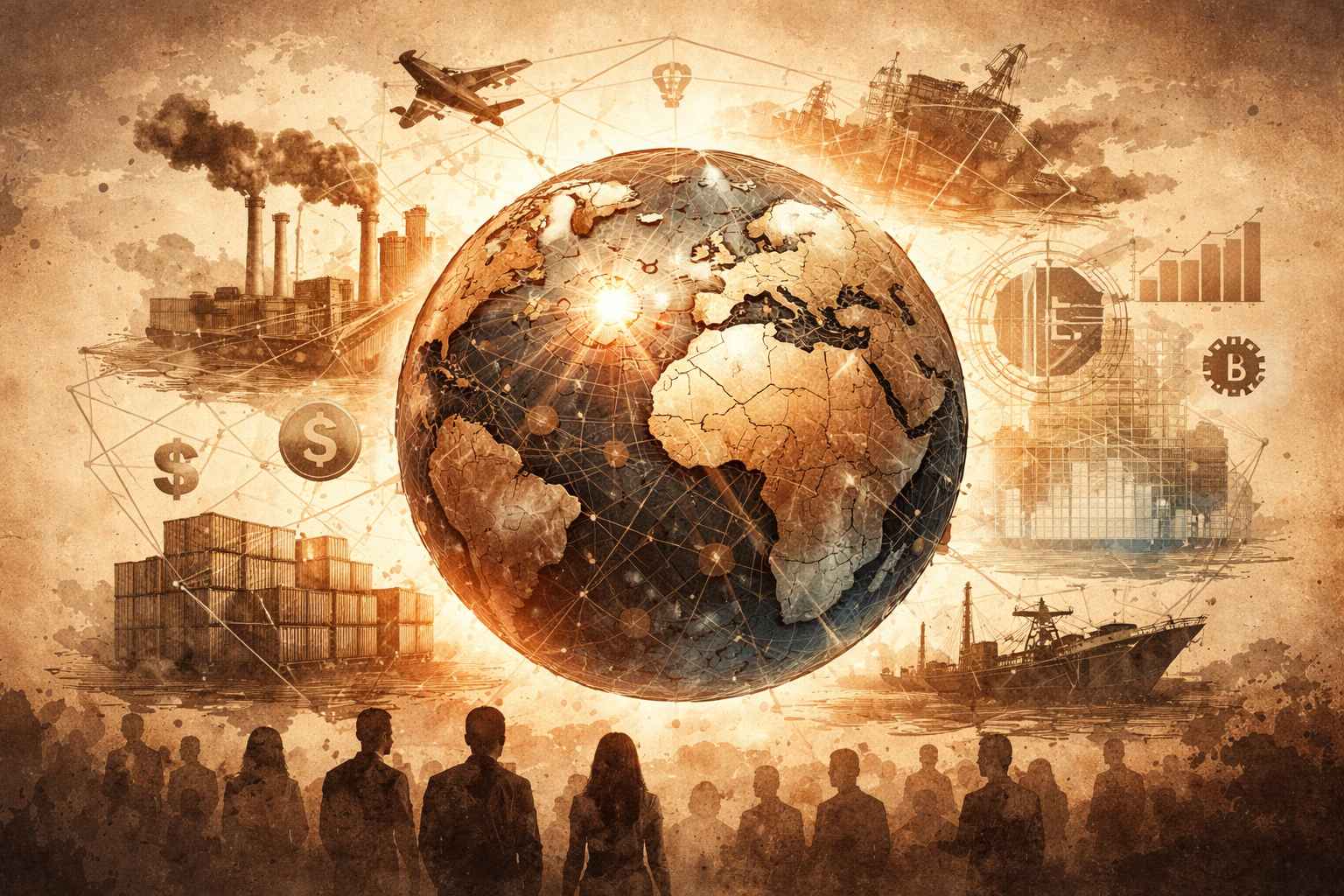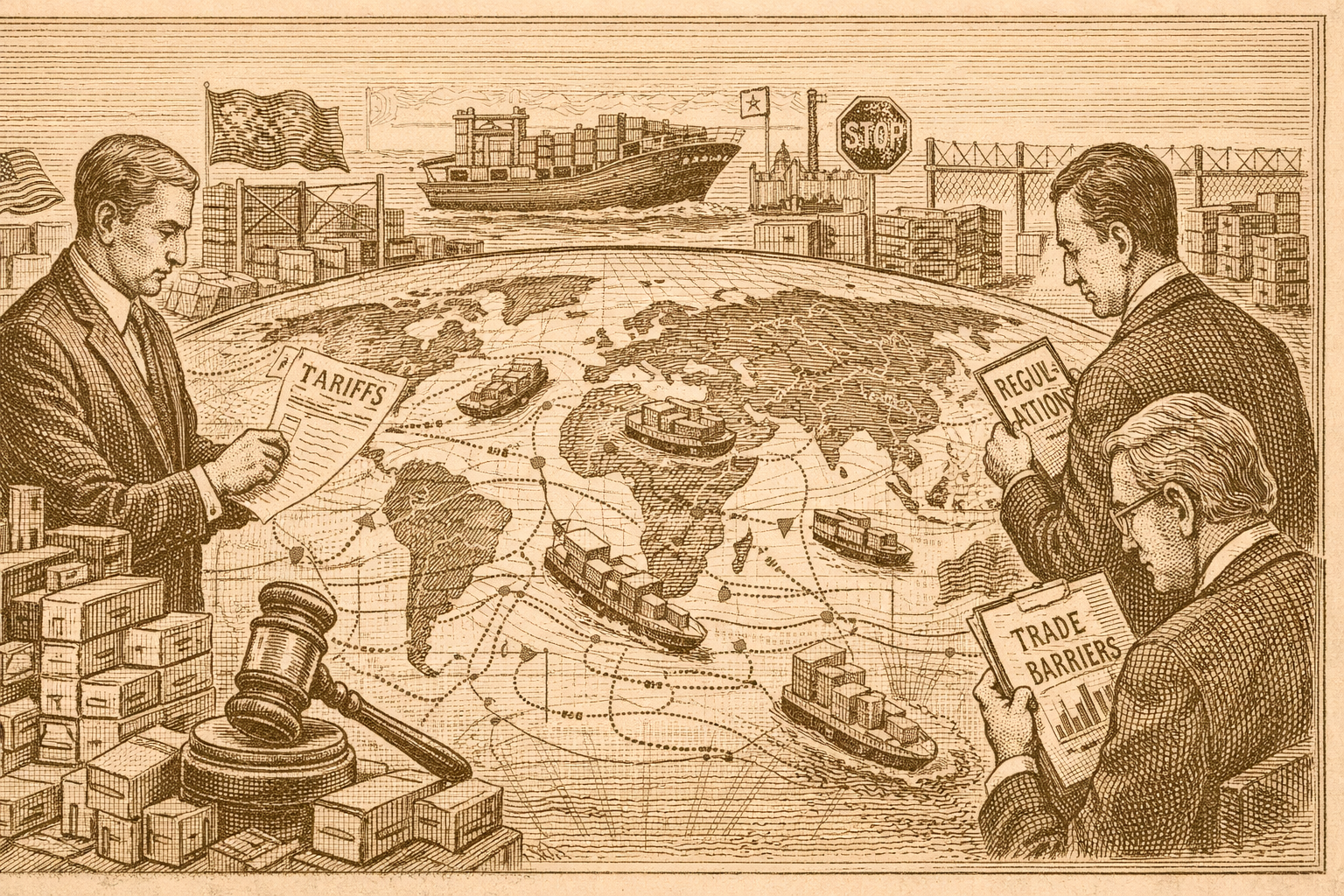
We have observed that, for the better part of the last three decades, free global trade was regarded as an unquestionable pillar of global economic policy. Undoubtedly, the prevailing economic orthodoxy of that era strongly favored the free trade paradigm. The core principle was clear: to reduce barriers to trade, foster global supply chains for the benefit of all, and—through the embrace of international cooperation—generate unprecedented prosperity, boost commerce among all nations, and build a more peaceful world.
Institutions such as the World Trade Organization (WTO) were established to serve as the standard-bearers for this global marketplace, and, in turn, regional trade agreements proliferated. Consumers enjoyed access to a wide variety of affordable goods, businesses gained entry into vast new markets, and developing economies witnessed significant growth.
We have seen governments lower tariffs, companies expand their global supply chains, and international institutions champion open markets as the bedrock of economic progress.
Today, that consensus is crumbling entirely.
However, in recent years, this established consensus has begun to unravel. A powerful counter-current—economic nationalism—is re-emerging, challenging the very foundations of globalization and is reshaping the global economic landscape.
Fundamentally, economic nationalism prioritizes domestic economic interests over global integration. It advocates for policies designed to protect local industries and workers—often through the imposition of tariffs, quotas, subsidies, and other forms of government intervention.
Across the globe, governments are increasingly imposing tariffs, subsidizing domestic industries, restricting technology transfers, and restructuring supply chains. What was once viewed merely as protectionism is now frequently being framed as strategic economic policy. These structural shifts are also visible in how global supply chains are being redesigned to reduce geopolitical and economic risk.
This shift suggests that the era of globalization—driven primarily by efficiency—is giving way to a more complex model, one in which resilience, security, and national interests play a far more prominent role.
The Era of Expanding Global Trade
From the early 1990s through the 2010s, the integration of the global economy across various nations accelerated dramatically. We witnessed the end of the Cold War, the substantial expansion of the World Trade Organization, and the rapid growth of emerging markets—factors that collectively fostered an environment conducive to unprecedented cross-border trade.
Business enterprises restructured their production systems with the aim of achieving global efficiency. Manufacturing operations were relocated to regions with relatively lower production costs, while advanced economies specialized in the service sector, technology, and high-value innovation.
This new model yielded distinct benefits. It provided consumers with access to affordable goods, enabled companies to expand their operations into new markets, and resulted in a rapid increase in the overall volume of global trade.
However, this system also fostered a deep sense of mutual interdependence among nations.
Why Governments Are Rethinking Free Trade
In recent years, we have seen a number of pressures forcing governments to rethink the assumptions that underpin globalization.
One reason is geopolitical competition. Great powers increasingly see economic policy as an extension of their strategic influence. Trade, investment, and access to technology are all now part of a larger geopolitical contest.
Another is domestic political pressure. The combined effect of the decline of industries in certain regions and the threat of job losses has increasingly led to demands on governments to protect national industries.
A third reason is strategic vulnerability. The reliance on foreign suppliers for everything from medical equipment to advanced semiconductors has raised questions about the resilience of global supply chains.
Taken together, these forces are reshaping the way policymakers think about trade. Leaders are finding major decisions harder to make. Let us now examine three examples that illustrate this turn towards economic nationalism
The policy of US, EU and China
1. The United States and the “America First” Policy:
Perhaps the most notable example of economic nationalism in recent years has been the economic policies pursued by the United States—particularly those adopted under Donald Trump and continued (albeit with different rhetoric and vision) under Joe Biden.
The “America First” doctrine explicitly prioritized American industry and workers; in doing so, it often ignored established international norms and agreements.
This was most clearly reflected in the imposition of tariffs on steel and aluminum imports from around the world, including from close allies, in the name of national security. The Trump administration also launched a trade war with China, imposing tariffs on hundreds of billions of dollars worth of Chinese goods. It also sought to renegotiate trade agreements such as NAFTA; As a result, NAFTA was replaced by the United States-Mexico-Canada Agreement (USMCA)—which tightened rules of origin on automobiles.
While the Biden administration has adopted a more cooperative approach with allies, many elements of economic nationalism remain at the heart of its overall economic strategy.
Their focus is now largely on industrial policy, with massive subsidies and tax incentives aimed at boosting domestic production in sectors considered crucial to future competitiveness and national security—such as semiconductors (CHIPS and Science Act) and clean energy (Inflation Reduction Act).
While concerns about climate change and supply chain sustainability are often cited as justifications for these policies, their underlying goal is clearly to build domestic industrial capacity and reduce dependence on foreign competitors—particularly China.
The continued application and expansion of “Buy American” provisions in government procurement underscores the continuing influence of economic nationalist ideology in U.S. policymaking.
2. The European Union’s Pursuit of Strategic Autonomy:
Although the European Union has traditionally been a strong advocate of free trade and open markets, it is also increasingly embracing elements of economic nationalism—often in the guise of “strategic autonomy.”
We see that, faced with geopolitical tensions, supply chain disruptions, and concerns about its own economic competitiveness, the European Union is now moving towards a more robust industrial policy.
This policy includes initiatives that aim to increase domestic production in key technology sectors such as batteries, hydrogen, and microchips, and to reduce dependence on external suppliers for essential raw materials. In addition, the EU is now implementing new tools or mechanisms to screen foreign investment in sensitive sectors and to tackle unfair trade practices—particularly those related to state subsidies.
A prime example of this policy shift is the European Union’s ‘Carbon Border Adjustment Mechanism’ (CBAM); it will impose a ‘carbon price’ on imports of certain ‘high-carbon’ products. While ostensibly an environmental measure—the main purpose of which is to prevent ‘carbon leakage’—CBAM also plays a conservationist role in practice.
It creates a level playing field for EU producers who are forced to comply with stricter climate-related restrictions in their own regions. The EU’s growing emphasis on ‘digital sovereignty’ and efforts to regulate Big Tech also reflect a desire to gain greater control over its own economic and digital future.
Although the European Union is committed to a ‘rules-based international order’, its recent actions increasingly reflect a realization that—in this era of resurgent economic nationalism—a market-based approach alone may not be enough to protect its interests.
3. China’s “Dual Circulation” Strategy and Technological Self-Reliance:
Another example is that of China. Chaina has long been a major beneficiary of globalization/ It has also been adapting its economic strategy in response to the changing global environment and its own internal challenges. Its “Dual Circulation” strategy, unveiled in 2020, emphasizes boosting domestic demand and innovation (“internal circulation”) as the primary engine of growth, while still engaging with the global economy (“external circulation”).
This marks a shift away from over-reliance on export-led growth and towards building a more resilient and self-sufficient domestic economy. A central component of this strategy is the pursuit of technological self-reliance, with massive state investment being directed towards developing homegrown capabilities in critical technologies like semiconductors, artificial intelligence, and quantum computing.
China’s approach, often referred to as “state capitalism,” involves a high degree of government intervention, including state-owned enterprises, industrial subsidies, and strategic planning.
While China continues to advocate for open markets on the global stage, its domestic policies are increasingly geared towards nurturing national champions and reducing dependence on foreign technology and markets. The “Made in China 2025” initiative, aimed at upgrading China’s manufacturing base and dominating key high-tech sectors, is a prime example of this state-led industrial policy.
This approach has fueled trade tensions with other countries, particularly the United States, which accuse China of engaging in unfair trade practices and using state power to gain an unfair advantage in the global marketplace.
Technology as a Strategic Battleground
In recent time, we see that technology has become one of the most sensitive areas of international economic competition.
Advanced semiconductors, artificial intelligence systems, telecommunications infrastructure, and rare-earth minerals are increasingly treated as strategic assets rather than ordinary commercial products.
Governments are imposing export controls, screening foreign investments, and supporting domestic technology based industries through providing subsidies and enacting friendly industrial policy.
The resulting trade policy is therefore evolving into a tool of technological and geopolitical competition.
Businesses Are Adjusting to a New Reality
For global businesses, the changing trade environment introduces new layers of complexity.
Companies must now consider not only cost efficiency but also geopolitical risk, regulatory shifts, and national security policies. Supply chains that once spanned multiple continents are being redesigned to reduce exposure to disruption or political pressure.
Many organizations are adopting strategies such as “friend-shoring” or “near-shoring”. This ia all about locating production in politically aligned or geographically closer regions.
In this new environment, global strategy increasingly requires political awareness.
The New Balance Between Openness and Security
Despite the growing global uncertainty and shift toward economic nationalism, global trade is unlikely to disappear. International commerce remains essential for innovation, growth, and technological progress.
The challenge for policymakers is to find a balance between openness and security.
Too much protection can reduce competition, which may fuel increase costs, and also slow innovation. On the other hand, too little protection may expose countries to strategic vulnerabilities.
Therefore, we may safely conclude that this emerging trade landscape is not a simple reversal of globalization, but a recalibration of how economic interdependence is being managed by various countries.
What This Means for Young Leaders
For the next generation of leaders, the relationship between economics and geopolitics will become increasingly important.
Business decisions will no longer be shaped solely by market dynamics. Trade policy, industrial strategy, and regulatory environments will influence where companies invest, manufacture, and innovate.
Understanding global political and economic trends will therefore become a critical leadership skill.
Leaders who can interpret both economic signals and geopolitical developments will be better positioned to navigate the changing landscape.
Key Takeaways
- The long-standing consensus supporting free trade is weakening across many regions.
- Governments are increasingly prioritizing economic resilience and national security.
- Global supply chains are being redesigned to reduce vulnerability.
- Technology competition is reshaping international trade policy.
- Future leaders will need to understand both markets and geopolitics to make informed decisions.
We may safely say that globalization is not ending, rather it is evolving to a new paradigm. By all means, it seems that, leanring from history, while economic nationalism may offer short-term political gains and of course, a sense of greater control, it also carries significant risks.
Increased protectionism can lead to retaliatory measures, unwanted trade wars, and a fragmentation of global supply chains, that can potentially lead to higher costs for consumers, reduce efficiency, and slow global economic growth.
It also risks exacerbating geopolitical tensions and undermining international cooperation on critical global challenges like climate change and pandemics.
Moving forward, the challenge for policymakers is to find a balance between addressing the legitimate concerns about the uneven distribution of the benefits of globalization and the vulnerabilities of global supply chains, while still harnessing the potential of international trade to drive innovation and prosperity.
This will require a more nuanced approach to globalization. This shall recognize the need for greater social safety nets, investments in education and training, beside making robust international rules that promote fair competition and address the challenges of the 21st-century economy.
Therefore, we may safely say that the return of economic nationalism is not necessarily an end to globalization, rather it does mark the end of globalization as we have known it. This may usher in a more complex and potentially more conflict-ridden era of global economic relations.
The world is entering a phase where economic openness is balanced more carefully against strategic independence. For leaders and organizations alike, adapting to this shift will be one of the defining challenges of the coming decade.