Executive Insight: The Changing Meaning of Success
Business growth is no longer the only measure of corporate success. For years, organizations were judged primarily by expansion, rising revenues, growing market share, and increasing user bases. Companies that scaled rapidly were rewarded by investors, admired by competitors, and pursued by talent.
Today, however, that definition is beginning to change.
Across industries, organizations are slowing expansion, cutting costs, and focusing more carefully on resilience, profitability, and long-term sustainability. This is not merely a temporary correction. It reflects a broader structural shift in how companies define success in an uncertain economic environment.
The Growth Era: When Scale Defined Strength
The previous decade was shaped by abundance.
Capital was easily available, interest rates were low, and global markets were expanding. In this environment, companies prioritized scale over efficiency.
The logic was simple. Corporate houses must acquire customers quickly and expand into new markets. They had the luxury of worrying about profitability later.
Companies like Uber, WeWork, and several e-commerce platforms expanded aggressively across geographies, often prioritizing user growth over financial discipline. Even at times they didn’t bother to think about profit at the first place.
Growth was seen as validation for success.
The Turning Point: When Conditions Changed
The environment that supported growth-first thinking has changed.
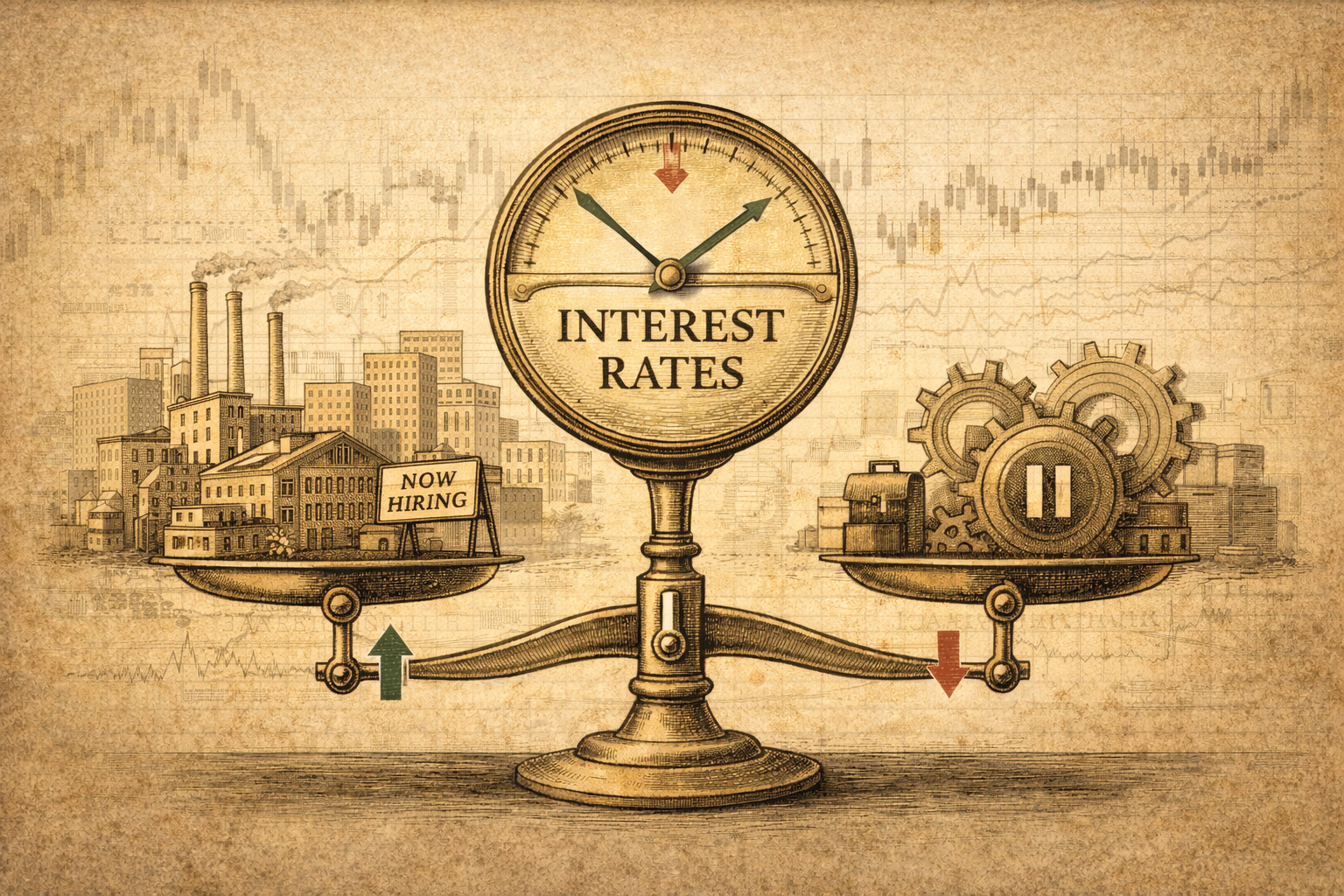
Rising interest rates, tighter capital availability, and global uncertainty have altered the economics of expansion.
As discussed in companies becoming more risk-averse in an uncertain economy, organizations are now operating under constraints rather than abundance.
Many global technology firms, such as Meta and Amazon shifted from aggressive hiring to workforce reductions within a short span, reflecting their reassessment of priorities in running a business.
Growth strategies built for stability struggle in volatility.
The Hidden Cost of Growth
Growth is not inherently problematic. But corporate financial analysis shows that uncontrolled growth can create hidden vulnerabilities.
Very often, it is noticed that when organizations expand too quickly, their overall cost structures become inefficient, while their operational complexity increases every day. Also they lose strategic focus to a great extent.
In recent times, WeWork’s rapid expansion without a sustainable financial model exposed structural weaknesses. That ed to their dramatic correction in valuation.
Similarly, several startups that scaled aggressively during funding booms faced layoffs when capital conditions tightened.
Growth amplifies both strength and weakness.
From Expansion to Endurance
However, the shift we are witnessing is not anti-growth. It is a move toward balanced growth.
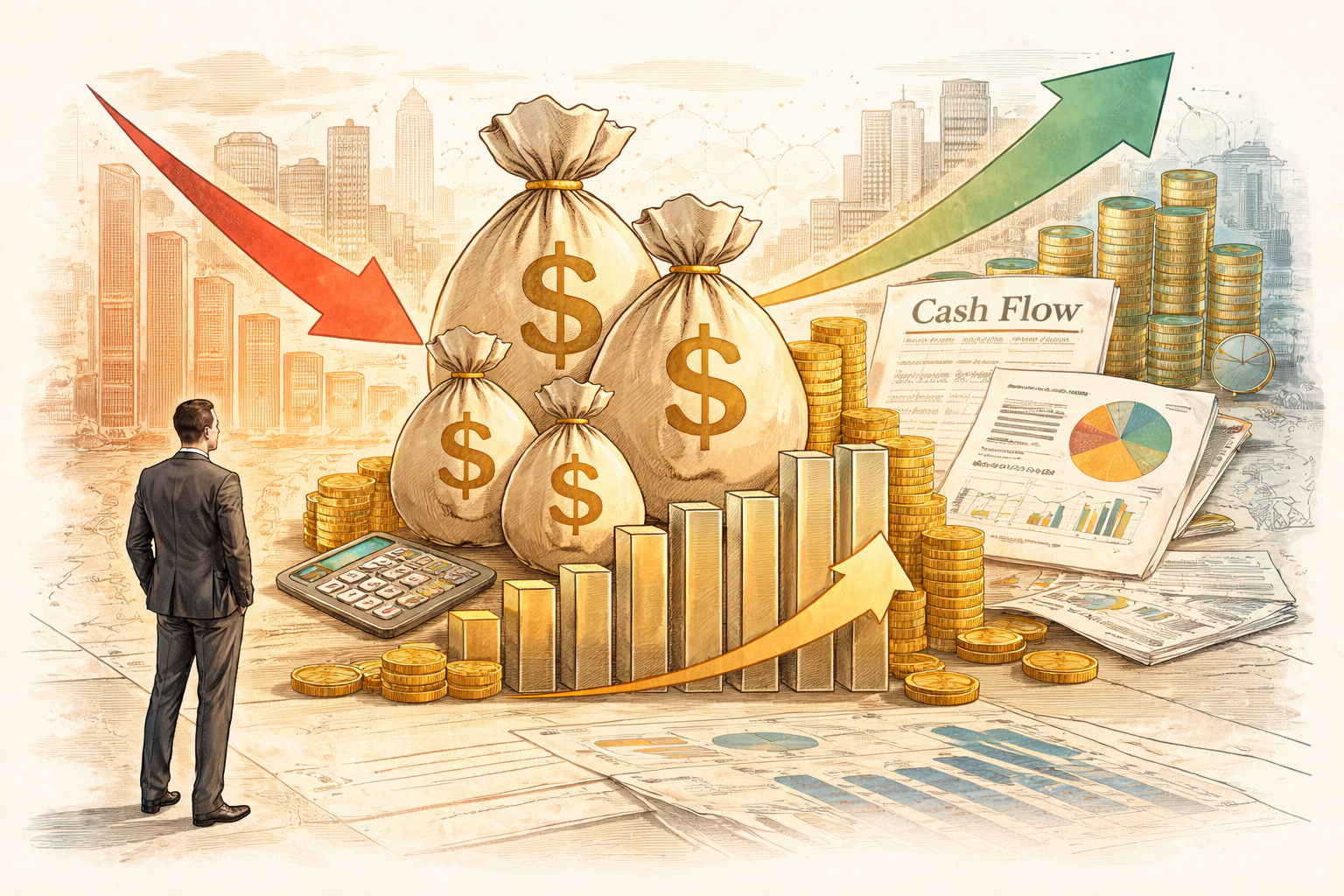
Organizations are redefining success around four key areas. 1] profitability, 2] cash flow stability, 3] operational resilience, and 4] long-term sustainability.
Companies like Apple and Microsoft, while continuing to grow, emphasize, inter alia, strong margins, very disciplined capital allocation, and stability in ecosystem.
They demonstrate that scale without control is not sustainable.
The New Metric: Quality of Growth
Not all growth is equal.
The emerging focus is on the quality of growth, not just its speed.
We notice that high-quality growth is not only more efficient but also more sustainable. That is also aligned with long-term strategy.
Many SaaS companies are now evaluated on metrics such as, customer retention, lifetime value, and profitability per user, rather than just user acquisition.
Growth is no longer about “how fast,” but “how well.”
Why This Shift Matters for Jobs
The redefinition of success directly affects employment.
When companies move from expansion to discipline, their hiring slows down. As a result, roles become more specialized and their performance expectations increase form their talent pool.
As explored in the new work paradox, this creates a situation where opportunities exist, but stability feels weaker.
We notice, organizations are increasingly hiring for critical roles and high-impact functions, while reducing general or redundant positions.
Business strategy is now shaping job security more directly than ever before.
Leadership in the Era of Constraints
This subtle shift is also redefining leadership. Leaders must now balance their growth ambitions and financial discipline. They must manage their risk vis-à-vis long-term positioning.
As discussed in leaders struggling to decide, even with more information, decision-making becomes more complex when trade-offs intensify.
CEOs today are expected not only to grow the company, but also to manage investor expectations, while ensuring operational efficiency. As a result, they navigate uncertainty more efficiently.
Leadership is moving from expansion-driven to judgment-driven.
The Broader System at Work
Here is a subtle fundamental shift. This transformation is not isolated.
It is influenced by technological disruption and resulting global supply chain restructuring. Also governments are intervening in markets.
These forces interact, creating an environment where unchecked growth becomes risky.
The system no longer rewards speed alone. It rewards stability under pressure.
What This Means for Young Leaders
For emerging leaders, the implications are clear.
Success is no longer defined by rapid scaling, aggressive expansion, and visible growth metrics.
Instead, it is defined by sustainable performance, strategic thinking with a touch of disciplined execution.
A Defining Idea
In the past, success was about growing fast.
Today, the focus is more about lasting long.
A New Definition of Success
We are entering a phase where business success is being redefined. We tried to capture the essence of it comparing the two models.
| Old Model | Emerging Model |
| Growth at any cost | Growth with discipline |
| Scale over efficiency | Balance of scale and stability |
| Expansion-driven | Resilience-driven |
| Short-term metrics | Long-term sustainability |
Therefore, we may safely say that resilience-driven growth will bring long-term sustainability that can help balance scale and stability.
Key Takeaways
- Growth is no longer the sole indicator of business success.
- Changing economic conditions have made capital more disciplined.
- Rapid expansion without structure creates long-term risk.
- Companies are focusing on profitability, resilience, and efficiency.
- This shift directly impacts hiring and job stability.
- Leadership now requires balancing ambition with control.
Closing Thought
Growth has not disappeared.
But its meaning has changed.
In a more uncertain and constrained world:
The strongest organizations are not the fastest-growing ones.
They are the ones that can endure.