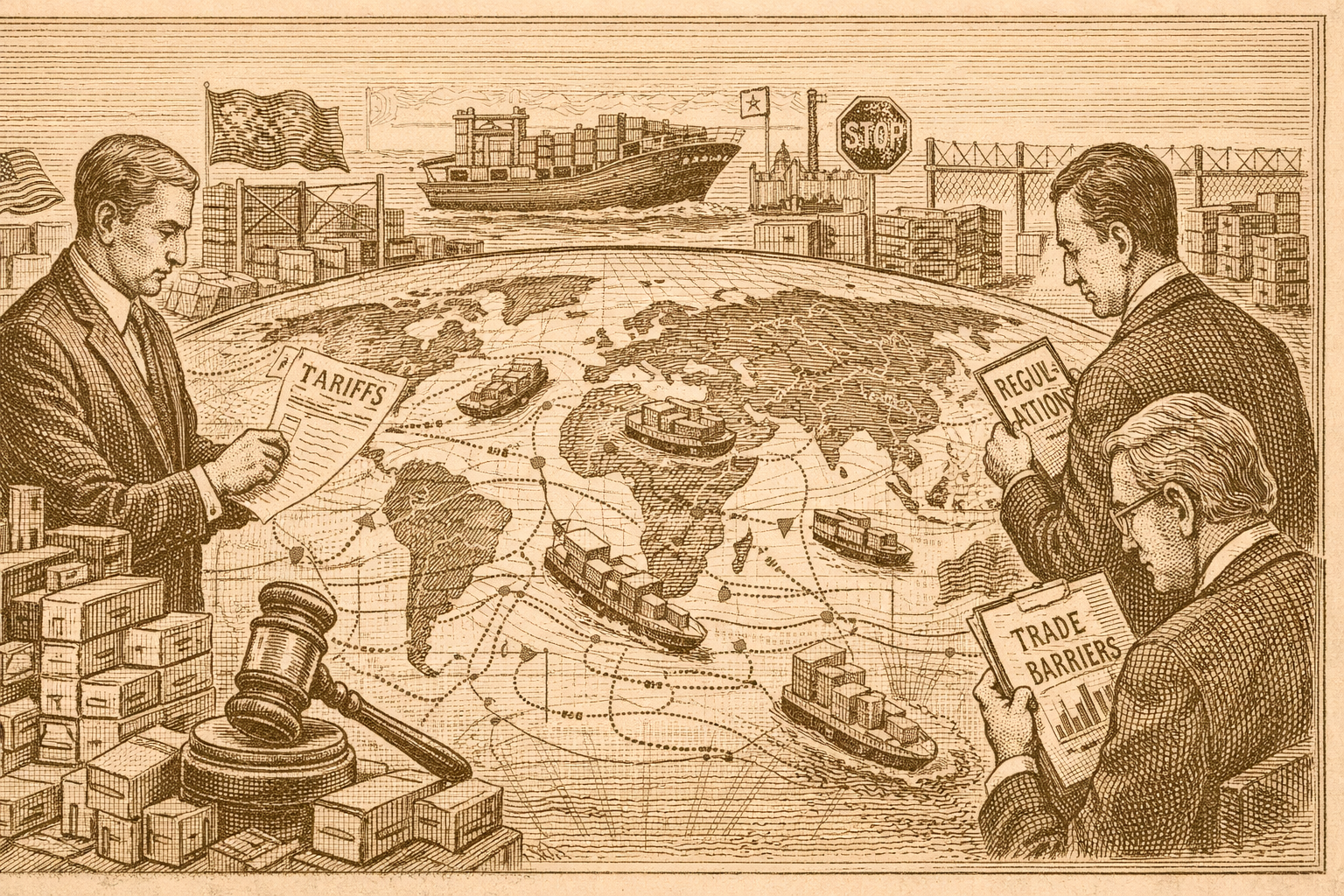
We experience in history that for decades, global supply chains were designed around a single principle: efficiency.
Traditional companies sourced raw materials from the lowest-cost regions, manufactured products where labor was cheapest, and distributed them across global markets with increasing speed.
This efficiency based system reduced costs of production, improved profit margins, and supported the rapid expansion of international trade.
Today, that model is being reconsidered by all companies, not just the new start ups, but also the traditional ones.
Across the globe, across industries, organizations are restructuring supply chains—not to maximize efficiency alone, but to balance it with resilience, security, and flexibility.
What is emerging is not the end of globalization, but a transformation in how it is organized.
The Efficiency Model That Shaped Globalization
The modern supply chain system was built on the theory of optimization.
Advancements in logistics, communication, and digital coordination allowed companies to manage complex, cross-border production networks. Just-in-time manufacturing minimized inventory costs, while global sourcing ensured competitive pricing.
This model worked well in relatively stable environments.
However, it relied on a critical assumption: that global systems would remain predictable and uninterrupted.
A deep dive reveals that the modern supply chain was built on “just-in-time” manufacturing, which minimized inventory costs but relied on a critical assumption: that global systems would remain predictable. Recent years have shattered that assumption.
The 2024-2025 Red Sea Crisis. Continuous maritime disruptions forced global shipping giants like Maersk to divert vessels around the Cape of Good Hope. This added 10 days to transit times and increased fuel costs by roughly 40%, proving that highly optimized, “linear” routes are incredibly fragile when geopolitical friction occurs.
Therefore, we can say that highly optimized systems become liabilities when the, so called, “uninterrupted” global environment disappears.
When Efficiency Meets Disruption
Recent years have challenged that assumption.
Pandemics, geopolitical tensions, trade restrictions, and logistical bottlenecks have disrupted supply chains across sectors. Shortages of semiconductors, medical supplies, and industrial components revealed how many industries had become so dependent in specific regions.
These disruptions exposed a key vulnerability. We see that the highly optimized systems can become fragile when conditions change.
As growing global uncertainty is increasingly taking real shape, multiple forces now interact simultaneously, that make disruptions more frequent and harder to anticipate.
The Shift Toward Resilience
In response, companies are redefining what an effective supply chain looks like.
Instead of focusing solely on cost minimization, organizations are prioritizing on a few fundamental aspects. These may include, inter alia, diversification of suppliers, regional production hubs, strategic inventory buffers, alternative logistics routes.
This shift reflects a broader understanding that resilience carries value—even if it increases costs.
In response, companies are prioritizing diversification and strategic inventory buffers over pure cost-minimization. Resilience now carries a recognized financial value, even if it increases the baseline cost of goods.
Toyota’s “Rescue” System. Learning from past semiconductor shortages, Toyota moved away from pure just-in-time logistics for critical components. They now maintain a “digital map” of their entire multi-tier supplier network and keep up to six months of “buffer stock” for high-risk parts, prioritizing availability over immediate cash flow.
Geopolitics and Strategic Realignment
Supply chains are no longer shaped only by economics. Geopolitics is playing an increasingly central role.
Governments are encouraging domestic production in critical sectors such as semiconductors, energy, and pharmaceuticals. Trade policies and strategic alliances are influencing where companies locate operations.
As seen in the broader shift where economies are moving away from free trade toward more strategic economic positioning, supply chains are becoming aligned with political and security considerations.
This process is often described using some newly coined terms, such as “reshoring,” “near-shoring,” and even “friend-shoring.”
Each reflects an attempt to reduce exposure to geopolitical risk.
So to say, supply chains are no longer shaped by economics alone; they are becoming aligned with political and security considerations. This is manifesting in the rise of reshoring, near-shoring, and “friend-shoring.”
Apple’s “India+1” Strategy. Apple has significantly accelerated its manufacturing shift to India and Vietnam to reduce exposure to geopolitical tensions. By 2025, reports indicated that nearly 25% of all iPhones were being produced in India, a massive shift from a decade ago when production was almost exclusively concentrated in a single region.
The Role of Technology in Supply Chain Transformation
Technology is both a driver and an enabler of change.
Advanced analytics, automation, and artificial intelligence are improving visibility across supply networks. Companies can now track disruptions, forecast demand more accurately, and respond more quickly.
However, as explored in what artificial intelligence still cannot do—and why it matters, technology cannot eliminate uncertainty. It can support decision-making, but it cannot fully predict or control external shocks.
Human judgment remains essential in designing and adapting supply strategies.
Cost vs Security: A New Trade-Off
One of the most significant implications of supply chain restructuring is the emergence of new trade-offs.
- Lower costs often require concentration in specific regions
- Greater security requires diversification and redundancy
Organizations must now balance these competing priorities.
In many cases, companies are accepting higher costs in exchange for reduced risk. This represents a shift in strategic thinking—from short-term optimization to long-term stability.
Organizations are now making the difficult choice to accept higher costs in exchange for reduced risk. This represents a permanent shift from short-term optimization to long-term stability.
Intel’s Global “Mega-Sites.” Intel is spending over $100 billion to build new semiconductor plants in Ohio and Germany. These facilities are more expensive to operate than those in East Asia, but they provide “Geographic Insurance.” Intel is betting that customers will pay a premium for chips that are guaranteed to be produced in stable, friendly regulatory environments.
What This Means for Businesses
For businesses, supply chain decisions are becoming more complex.
Leaders must evaluate a few aspects, such as, geopolitical exposure, regulatory environments, supplier reliability, operational flexibility
Across the globe, and the countries, these decisions are closely linked to broader strategic considerations.
As seen in how companies are becoming more risk-averse in an uncertain economy, supply chain restructuring is part of a wider move toward cautious and resilient business models.
What This Means for Young Leaders
For emerging leaders, like you, understanding supply chains is no longer a purely operational concern.
It is a strategic capability.
Therefore, leaders must be able to interpret global trends and assess risk across interconnected systems. These two fundamental shift in thinking will help them make good decisions under uncertainty
Supply chains are not just logistical networks—they are reflections of how the world economy is evolving.
The Future of Globalization
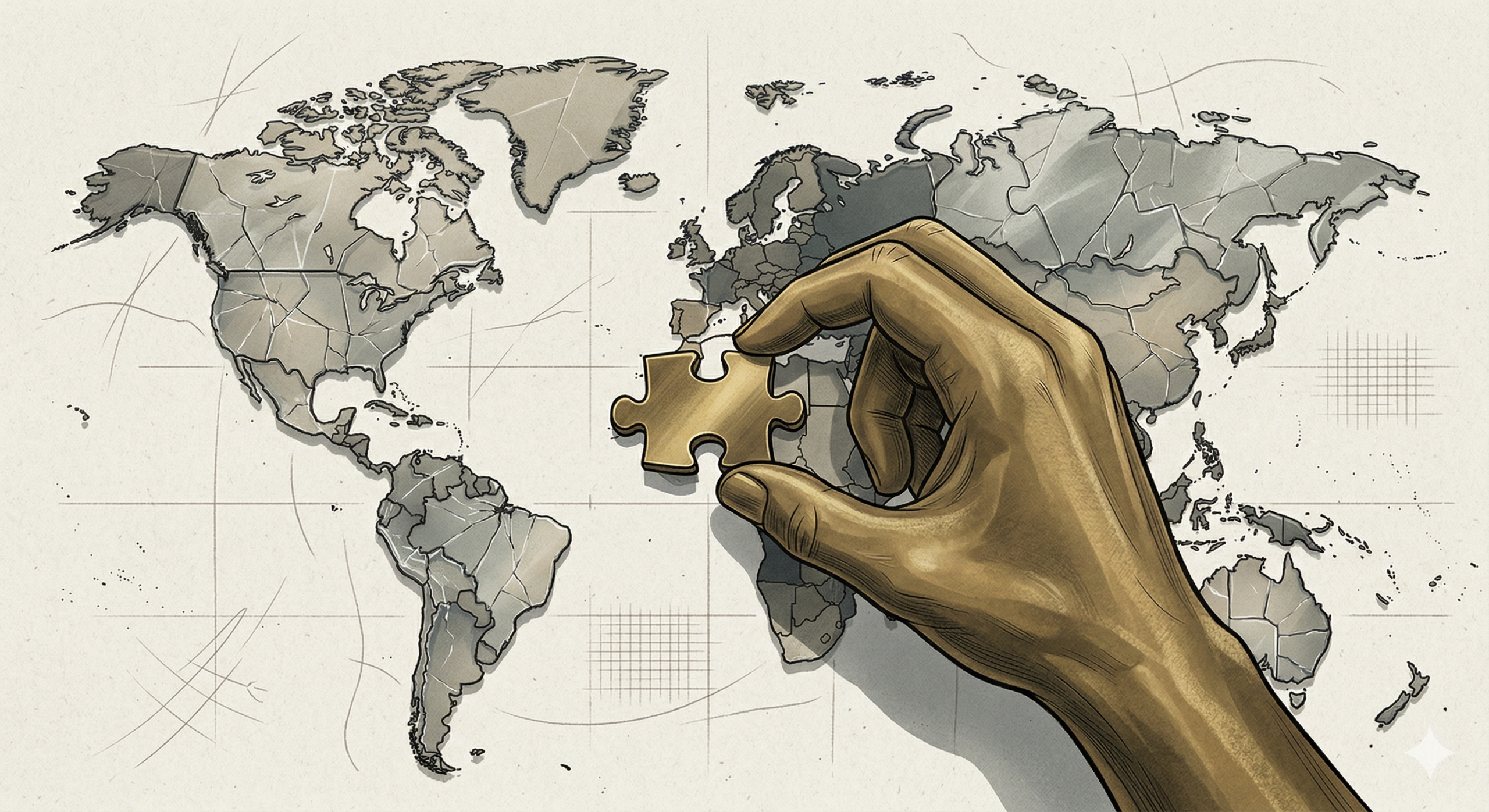
Globalization is not disappearing. It is being reshaped.
Instead of a single, highly integrated system, the future may consist of multiple interconnected but regionally aligned networks.
For sure, trade will continue, but with new and dynamic constraints and priorities.
And, efficiency will remain important, but it will no longer be the only objective.
Key Takeaways
- Global supply chains are shifting from efficiency to resilience.
- Recent disruptions have exposed vulnerabilities in highly optimized systems.
- Geopolitics is increasingly influencing supply chain decisions.
- Technology supports visibility but cannot eliminate uncertainty.
- Businesses are balancing cost with security and flexibility.
Supply chains are not just operational systems.
They are indicators of how the global economy is reorganizing itself.