For much of the past decade, business strategy was driven by growth. Companies expanded into new markets, invested aggressively, and prioritized scale as a measure of success. Access to capital was relatively easy, and the global economic environment supported long-term expansion.
Today, that orientation is changing.
Across industries, organizations are becoming more cautious. Investment decisions are being scrutinized more closely, hiring plans are being adjusted, and operational efficiency is receiving renewed attention. What appears on the surface as conservatism is, in reality, a response to a changing economic landscape.
Risk aversion is not simply a shift in mindset—it is a structural adjustment.
The Shift from Expansion to Preservation
In stable environments, growth-oriented strategies tend to dominate. Companies take calculated risks to capture market share, build capabilities, and outpace competitors.
However, when uncertainty increases, priorities shift. Preservation of capital, operational resilience, and flexibility become more important than rapid expansion.
This transition is visible across sectors. Organizations are reassessing large investments, delaying non-essential projects, and focusing on core business performance. The emphasis is no longer on how fast a company can grow, but on how well it can sustain itself under changing conditions.
The ‘growth at all costs’ era, defined by the Silicon Valley mantra of ‘move fast and break things,’ has been replaced by a ‘Year of Efficiency’ ethos. We see this most clearly in the strategic pivots of tech giants like Meta and Amazon. In 2023 and 2024, these firms shifted billions in capital away from speculative, long-horizon projects—like the unproven Metaverse—back toward their high-margin core businesses of advertisements. For today’s boardrooms, preservation of the balance sheet is no longer a defensive crouch; it is the primary strategic objective.
Uncertainty as a Strategic Constraint
One of the primary drivers of risk-averse behavior is the nature of uncertainty today.
Economic conditions are influenced by multiple overlapping factors: fluctuating interest rates, geopolitical tensions, evolving trade policies, and technological disruption. These forces do not operate independently; they interact in ways that make outcomes harder to predict.
As discussed in the context of today’s growing global uncertainty, organizations are no longer responding to isolated risks. Instead, they are navigating a system where multiple variables shift simultaneously.
In such an environment, traditional forecasting becomes less reliable, and decision-making becomes more cautious. This cautious approach also reflects a broader shift where businesses are redefining success beyond rapid expansion.
Modern uncertainty has forced a shift from ‘Just-in-Time’ to ‘Just-in-Case’ logistics. Apple’s ongoing diversification of its manufacturing base—moving significant production lines from China to India and Vietnam—is a prime example. While ‘friend-shoring’ and regionalizing supply chains often result in higher operational costs, companies are increasingly willing to pay a ‘stability premium’ to insulate themselves from geopolitical shocks that were once considered ‘black swan’ events but are now viewed as inevitable.
The Rising Cost of Capital
Another important factor is the changing cost of capital.
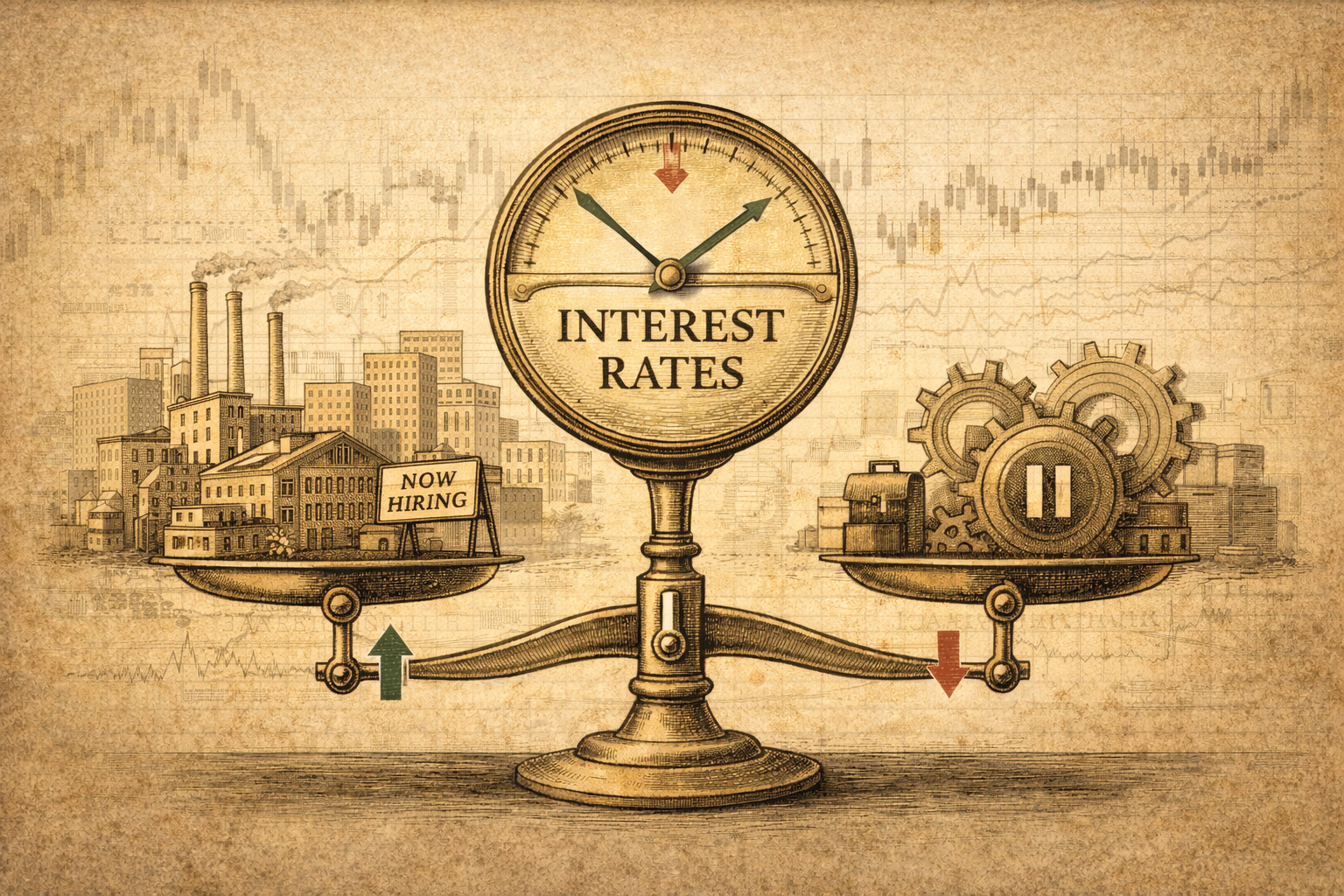
In periods of low interest rates, borrowing is inexpensive, encouraging companies to invest and expand. When interest rates rise, capital becomes more expensive, and the margin for error narrows.
Higher financing costs force organizations to reassess their investment strategies. Projects that once appeared viable under optimistic assumptions may no longer meet required return thresholds.
As a result, companies prioritize initiatives that offer clearer, more immediate value, while postponing those with uncertain or long-term payoffs.
The era of ‘free money’ is officially over. With interest rates hovering far above the near-zero levels of the 2010s, the hurdle rate for new projects has skyrocketed. We are witnessing the era of the ‘refinancing wall,’ where ‘zombie companies’—firms that survived solely on cheap debt—are being forced into liquidation or aggressive restructuring. Capital is no longer a commodity to be burned for market share; it is a scarce resource that demands an immediate, tangible return on investment.
Learning from Recent Disruptions
Recent global events have reinforced the importance of resilience.
Supply chain disruptions, sudden demand shifts, and regulatory changes have demonstrated how quickly business conditions can change. Companies that were heavily optimized for efficiency often found themselves vulnerable when those systems were stressed.
This has led to a broader realization:
Efficiency without resilience can create hidden risks.
Organizations are now incorporating contingency planning, diversification, and flexibility into their strategies. These adjustments naturally lead to more cautious decision-making.
The 2023 collapse of Silicon Valley Bank served as a stark reminder that systemic fragility can hide in plain sight. This disruption fundamentally changed how corporate treasurers view liquidity. Many firms have shifted their cash reserves out of aggressive, yield-seeking vehicles and into ‘boring’ but liquid U.S. Treasuries.
The lesson learned is clear: in a volatile economy, the most important asset a company holds is not its intellectual property, but its immediate access to cash.
Financial Discipline as a Strategic Priority
In this environment, financial discipline has moved to the center of business strategy.
Companies are focusing on:
- strengthening cash positions
- improving cost structures
- ensuring sustainable margins
This aligns with the broader trend where companies are prioritizing financial stability over rapid expansion. The emphasis is shifting from growth at any cost to growth with control.
Such discipline is not merely defensive. It enables organizations to remain stable during uncertainty and act decisively when clearer opportunities emerge.
Even industry leaders are tightening their belts to signal discipline to the markets. Stripe, long considered one of the most successful private companies in the world, recently shifted its internal North Star from ‘user acquisition’ to ‘net income’ and sustainable margins. This reflects a broader trend where companies are prioritizing the optimization of existing revenue streams over the expensive gamble of entering unproven new markets.
The Leadership Dimension of Risk
Risk aversion is also shaped by leadership considerations.
Leaders today operate under increased scrutiny—from investors, regulators, employees, and the public. Decisions carry broader implications, and the cost of misjudgment can be significant.
As explored in how leaders are finding major decisions harder to make, the complexity of the environment affects not only what decisions are made, but how they are approached.
Leaders must balance:
- short-term performance
- long-term positioning
- stakeholder expectations
- ethical considerations
This balancing act naturally encourages a more measured approach to risk.
The profile of the ideal CEO has changed. The market’s enthusiastic reaction to ‘safe hands’ leaders—such as the return of Bob Iger at Disney—highlights a preference for seasoned stewards who can navigate margin pressure. Boards are increasingly wary of the ‘visionary’ who lacks operational rigor. In 2026, the most valued leadership trait is no longer the ability to dream of the future, but the ability to protect the present.
Technology and the Illusion of Control
Advanced analytics and artificial intelligence have improved decision support, but they have not eliminated uncertainty.
Technology can provide insights, identify patterns, and simulate outcomes. However, it cannot fully account for unpredictable external factors or human behavior.
In some cases, the availability of more data can create the illusion of control, leading to overconfidence. In others, it highlights the complexity of the environment, reinforcing cautious decision-making.
Understanding the limits of technology is therefore an important part of modern risk management.
While AI and predictive analytics promise to de-risk decision-making, they often create an ‘illusion of control.’ During the post-pandemic ‘bullwhip effect,’ many sophisticated algorithms failed to predict erratic consumer behavior, leading to massive inventory gluts. Leaders must remember that data-driven forecasting is a tool for navigation, not a guarantee of safety. Technology can calculate probability, but it cannot eliminate the inherent messiness of human-driven markets
What This Means for Business Strategy
The increasing risk aversion among companies signals a broader shift in how strategy is defined.
Instead of focusing solely on expansion, organizations are now balancing multiple priorities:
- growth
- resilience
- adaptability
- financial stability
This does not mean that companies are abandoning ambition. Rather, they are redefining what sustainable growth looks like in a more uncertain world.
What This Means for Young Leaders
For the next generation of leaders, this era of risk-aversion demands a change in professional currency. To stand out, you must pivot from being an ‘untested visionary’ to a ‘strategic problem-solver.’
- Pitch ROI, Not Just Innovation: Frame your ideas in terms of cost-saving or efficiency rather than just ‘newness.’
- Build ‘Operational Empathy’: When leadership is stressed about margins, the best young leaders are those who can keep their teams focused and productive without adding to the noise of organizational anxiety.
- Value Resilience Over Speed: In your personal career path, prioritize roles that offer ‘hard’ skill development in high-stakes areas like financial literacy, AI-integration, and crisis management.
These capabilities will define effective leadership in the years ahead.
Key Takeaways
- Companies are becoming more risk-averse due to structural changes in the global environment.
- Uncertainty today is driven by interconnected economic, political, and technological factors.
- Higher capital costs and recent disruptions have reinforced the need for caution.
- Financial discipline and resilience are becoming central to business strategy.
- Effective leadership now requires balancing growth with risk awareness.
Risk aversion, in this context, is not a retreat from ambition.
It is a recalibration of strategy in response to a more complex and less predictable world.