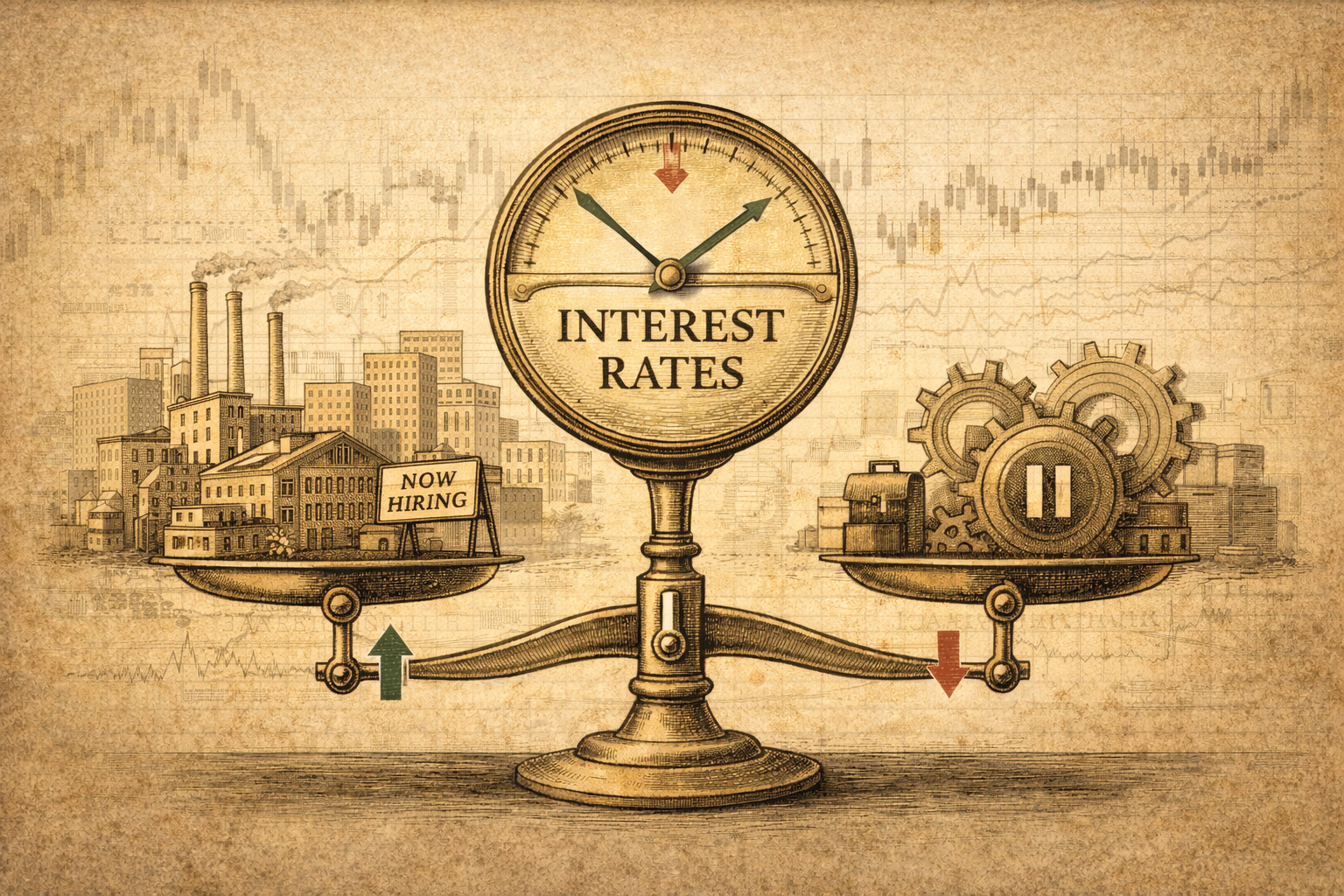
The businesses often face continual period of upheaval. In an environment marked by higher uncertainty and tighter financing, many companies are shifting their focus from rapid expansion to preserving cash flow and financial resilience.
This growing emphasis on financial discipline also reflects a broader shift where companies are becoming more cautious in how they approach risk in uncertain economic conditions.
What Has Changed in Corporate Priorities?
For much of the past decade, business success was often measured by growth — higher revenues, faster expansion, and increased market share. Therefore, easy access to capital and low borrowing costs have encouraged companies across industries to invest aggressively, even if profitability was delayed, even sometimes stalled.
In uncertain environments, many firms respond by prioritizing cash flow stability over aggressive growth, and these strategic shifts intersect with broader technological changes—particularly the ways artificial intelligence is reshaping jobs and work structures.
That environment has changed a lot.
Rising interest rates, tighter financial conditions due to lack of return, and uncertain market demand have made external funding more expensive and less predictable. As a result, many companies are reassessing what matters most for survival and stability. Increasingly enough, that answer is cash flow back from the market to the operations system and not growth alone.
Why Cash Flow Matters More in Uncertain Times
In business terms, cash flow reflects a company’s ability to generate money from its operations. Organization’s revenue growth can be supported by financial borrowing or investment. However, the cash flow indicates whether a business can sustain itself day to day by collecting amounts from the market.
In times of business uncertainty, when borrowing is further constrained, cash flow becomes critical. A strong cash flow can help an organization in multiple ways.
It allows companies to meet obligations without relying on new financing. When the demand fluctuates, it provides flexibility and reduces vulnerability to sudden market shocks.
During times of business uncertainties, liquidity often matters more than scale.
The Changing Cost of Capital
One major driver behind this shift is the cost of capital.
When the interest rates are low, and borrowing is cheap, growth could be financed easily. Today, higher interest rates mean that debt servicing has greater risk. Therefore, investors become less willing to invest for fund for long-term growth without clear returns.
As a fall-back mechanism, financial discipline becomes a priority. So, companies are now expected to demonstrate financial discipline, not just ambition for sheer growth.
This change in thought leads many firms to delay their capacity expansion plans. They reassess capital-intensive projects and capital investments may be either delayed or stalled.
As a result, priorities change and organizations choose projects with quicker payback periods.
Therefore, we can not just overwrite the concept of growth, neither it is avoided. This is being filtered more carefully.
Investor Expectations Are Evolving
These new dimensional changes are forcing investor to shift their priorities. They are also not solely rewarding the company for expansion. They are increasingly look for more predictable cash generation with sustainable margins. More appropriate to say a clear path to profitability.
This change is especially visible in sectors that previously emphasized growth over earnings. Many companies cannot demonstrate improving cash flow, they often face higher scrutiny and lower valuations.
Sectors That Prioritized Growth Over Earnings
Ride-Hailing Platforms — Growth Before Profitability
In the ride-hailing sector there is a prominent example of this kind where growth-first strategy has been in vogue from the beginning. Uber and its global Ride-Hailing peers expanded rapidly across cities and countries for years while operating at significant losses.
Their primary objective was to scale up by acquiring users, enrolling drivers, and capturing market share, so that competitors could not establish dominance. Institutional investors initially supported this approach, to get the first moving advantage. They believed, as they have been told, that profitability would follow once these platforms achieved sufficient operating scale and compounding network effects.
However, as financial conditions tightened across industries and investor scrutiny increased, these simple expectations fundamentally changed. Ride-hailing companies faced severe board-room pressure to reduce operating losses, improve unit level economics all across, and demonstrate sustainable cash flow rather than continued expansion at any cost.
So, it is safe to say that growth-led strategies can attract capital during favourable market and financial conditions. However, long-term viability of an organization will eventually depend on their ability to generate cash internally to keep the ball rolling.
Technology Startups and the “Growth-at-All-Costs” Era
For much of the 2010s, many technology startups prioritized rapid user growth over minimum sustainable earnings. Their higher than real valuations were often justified more by future potential rather than present day profitability.
A notable illustration is WeWork, which expanded aggressively by leasing large amounts of office space. At the early years they did all this at the cost of profitability. As they have continued access to external funding, their highly optimistic growth projections could sustain for sometime.
Later, when capital markets became less forgiving, this model proved fragile. Those companies that could not demonstrate improving cash flow faced sharp valuation corrections or restructuring. This shift also influences internal organizational design, including how middle management roles are being reconsidered in leaner corporate structures.
We can safely say that in growth-driven environments, access to capital can mask weak strategy and business fundamentals. When these superfluous conditions change, cash flow becomes the primary measure of resilience.
How This Shift Affects Business Decisions
Evidently, a stronger focus on cash flow shall influence other financial decisions across the organization. Going forward, the companies may must tighten all round cost controls and optimize inventory and working capital management.
All efforts will be directed to reduce discretionary spending and reevaluate hiring and expansion timelines. When companies prioritize cash flow, hiring decisions are often among the first strategic adjustments they make under changing policy and economic conditions.
When organizations are taking these kinds of decisions, they are not necessarily showing signs of weakness. In many cases, they reflect a strategic effort to strengthen the business before pursuing further growth.
Growth Is Being Reframed, Not Abandoned
Therefore, we may say that this shift does not mean companies are abandoning growth altogether. They are instead, reframing the growth in their strategic mindset.
They go for rapid expansion to sustainable progress by embracing value-first strategies going away from scale-first strategy. Eventually, they shall try to rely more on internal strength than external funding.
There are businesses that can grow while maintaining healthy cash flow. They are adjudged to be more resilient and better positioned for long-term success.
What This Means for Leaders and Professionals
Only disciplined leaders can prioritize cash flow. They have a clarity of purpose in the long-run. It involves making synergistic trade-offs, communicating realistic expectations, and aligning teams around financial realities across its cost-centres.
For committed professionals, this environment often brings an opportunity for change with greater focus on efficiency and impact. Before they decide on investment, they shall do more scrutiny of proposed project value. They shall also repose increased emphasis on financial awareness across roles.
Needless to say that understanding how cash flow shapes decisions can help individuals better anticipate organizational changes.
What to Watch Going Forward
Focus on healthy cash-flow may send several signals and shows clear influence on other financial parameters as well. However, we need to how long this shift persists. Like how long interest rate trends shall remain stable, access to capital markets will stay. The question remains whether the consumer and business both demand demand stability
By the time the conditions ease, growth may regain prominence again. Until then, cash flow will likely remain in focus and central to dynamic corporate strategy.
Key Takeaways
Across the sectors, during uncertain economic conditions, companies are prioritizing cash flow because it provides them operational flexibility, resilience in the midst of uncertaity, and independence from volatile financing markets.
Research shows that higher borrowing costs together with evolving investor expectations has made financial discipline more important than rapid expansion. Many businesses are redefining the growth part of the success. They seek progress that is not only sustainable to continue but also better be funded internally and aligned with long-term stability.