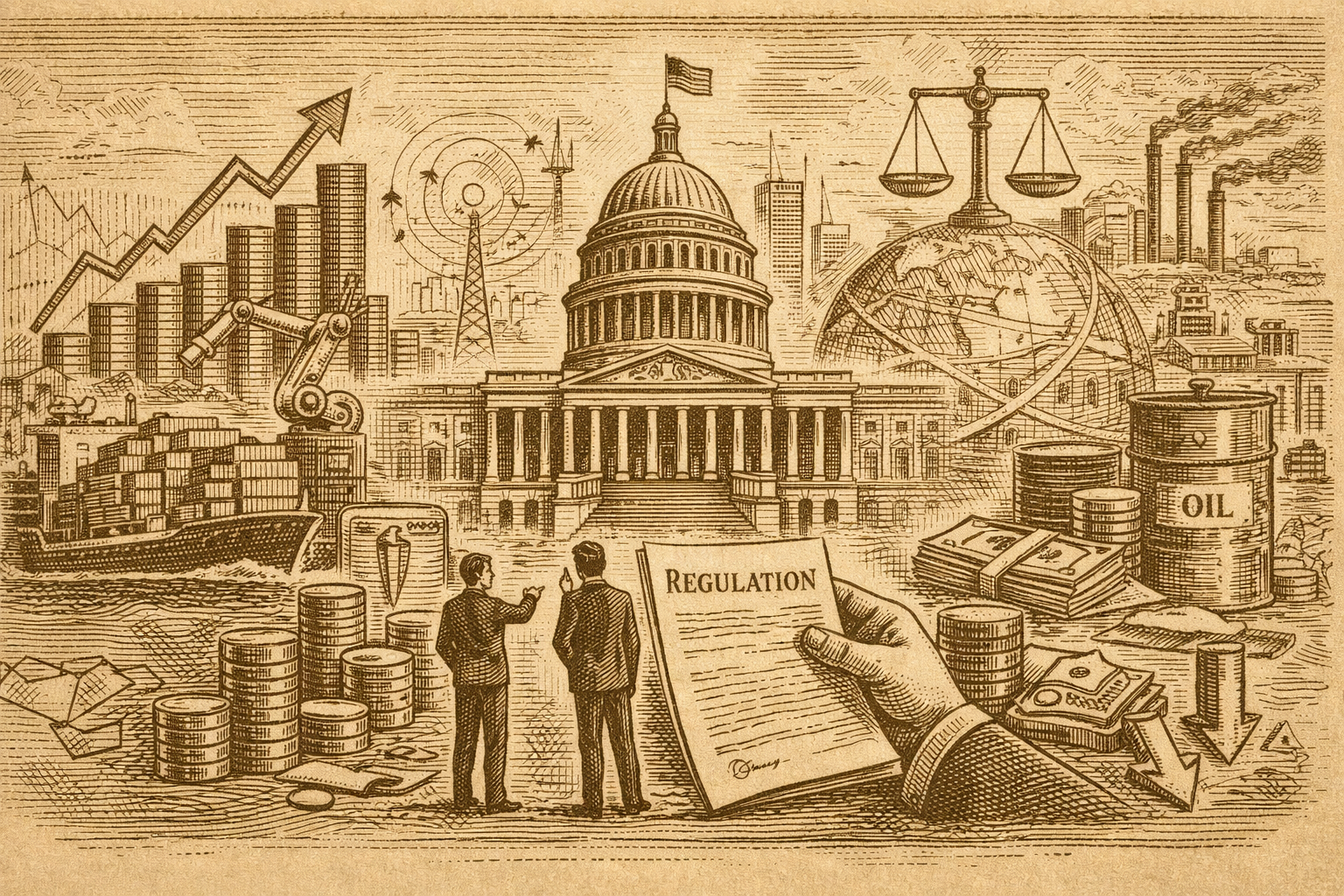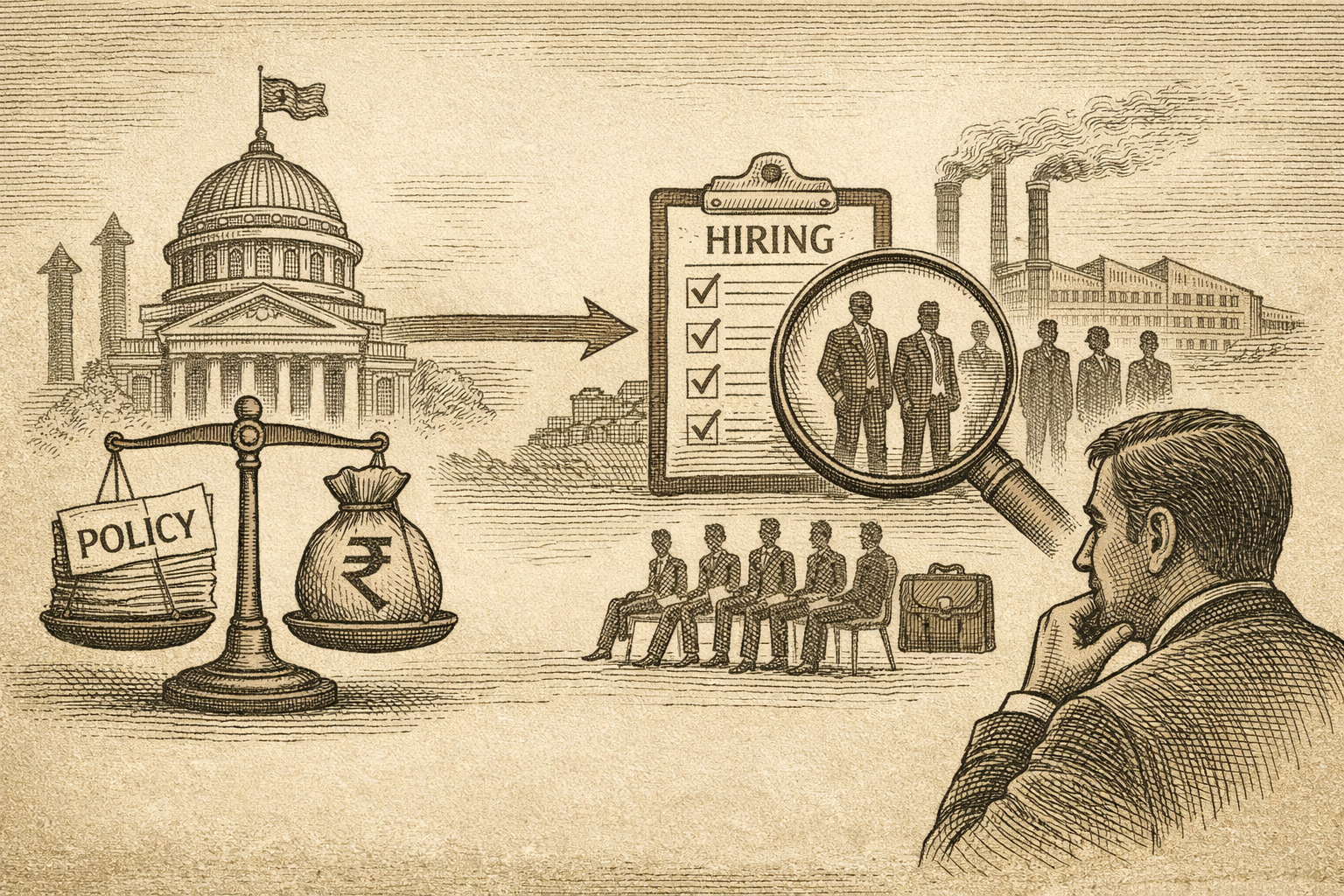
Historically, government policy decisions—be it from taxes and regulations to spending priorities—play a major role in the way how companies plan their hiring process, business expansion, and set workforce growth. Tax rules, compliance burdens, and regulatory signals influence whether leadership teams choose expansion or caution. For young professionals, these decisions determine not just job availability, but career trajectories.
What Is a Policy Change?
By the phrase government policy changes, we refer to decisions made by governments in the countries worldwide that affect very much how the economy operates. These can include various changes, inter alia, in taxation, labour laws, business regulations, public spending, trade rules, or incentives for specific industries.
Such changes may come through new laws enactment, budget announcements, regulatory updates, or executive decisions. While policy discussions often focus on politics, their real-world impact is felt most clearly inside the organizations. This especially reflects in hiring plans and workforce decisions.
For businesses, such policy changes alter their cost structure, operational risks in business, and long-term business sustainability. These all factors influence whether they expand teams or slow down recruitment.
Why This Matters To You
Hiring is not just about current demand; it is about confidence in the future.
When policies are stable and predictable, organizations feel safer to invest in new employees and train them for the future need. And when policies are unclear or frequently changing, businesses become cautious.
Uncertainty in policy matters can lead companies to delay their hiring decisions. They may also freeze their recruitment temporarily or prefer short-term contracts over permanent roles.
Even profitable companies may slow hiring if they are unsure how future rules will affect costs or operations. The Labour laws can sometime be very heavy on the short-term operational gains of an organization.
Where Does The Bigger Picture Take Us to
Corporate hiring is closely tied to how businesses assess their operational risks. Government policies influence this assessment in more ways than one. Hiring outcomes are often shaped not only by new policies, but by how effectively they are implemented in practice.
The tax policies affect net profitability and capital available for next cycle of investments. Labor rules and regulations in many cases shape hiring flexibility they have and long-term obligations, calculation of post retirement payments and welfare measures.
Government trade policies also influence supply chains eco-system and its global operations. Owing to the policies, public spending may change its course and affects consumer demands in key sectors like infrastructure investments, healthcare services, and new technology adoptions.
It is also observed that when government policies support growth and long-term clarity, corporate hiring tends to increase. When policies raise the degree of business uncertainty or costs, organizations start focussing on operational efficiency instead of business expansion.
This is why corporate hiring trends often change its course after major policy announcements are made. The impact is such that even before economic data fully reflects the impact, corporates initiate corrective actions.
To understand how government policy decisions influence corporate hiring in practice, it helps to look at real-world examples. We present two cases from different countries to show how businesses adjusted hiring and investment plans after major policy shifts.
Germany — Labor Market Reforms (Early 2000s)
Very well-designed labour reforms can effectively improve corporate level hiring confidence, wherein it reduces structural barriers, that encourages businesses to expand rather than delay recruitment, as in the usual cases.
| Policy change | Corporate response |
| In early, 2000s, Germany implemented multiple labour market reforms (commonly known as the Hartz reforms), which were aimed at improving labour flexibility and reducing unemployment. | Companies gained greater flexibility in hiring and workforce management. Firms increased part-time and contract-based employment initially. Over time, businesses expanded hiring as labour market rigidity reduced. |
In uncertain conditions, many firms also prioritize cash flow stability over rapid growth, which directly shapes recruitment decisions.
Policy Outcome
- ↓ Unemployment declined significantly over the following decade
- ↑ Export-oriented industries increased hiring
- ↑ Germany strengthened its position as a manufacturing and export powerhouse
United States — Post-2008 Financial Crisis Policy Response
It is observed that policy stability and sustained governmental support encouraged businesses to move from mere survival mode to expansion mode, that translating directly into job creation.
| Policy change | Corporate response |
| After the 2008 global financial crisis, the US government introduced a combination of fiscal stimulus and accommodative monetary policy. This included large-scale government spending, tax relief measures, and near-zero interest rates, which they maintained for several years. This made a huge impact across the sectors. | Companies initially froze hiring during the crisis. As the stimulus spending from government took effect and easy credit conditions are implemented, corporations started getting business confidence gradually again. Large corporations resumed hiring, particularly in technology, healthcare, and manufacturing sector. |
Policy Outcome: Between 2010 and 2015
- ↑ US private-sector employment grew steadily
- ↑ Technology and professional services firms expanded headcount
- ↑ Companies increased long-term hiring rather than relying solely on contract roles
India’s Goods and Services Tax (GST) Implementation (2017)
You may well understand that major policy changes can temporarily slow hiring, but over time they often reshape the job market, which creates demand for new skills and roles.
| Policy change | Corporate response |
| In 2017, India introduced the Goods and Services Tax (GST). That replaced a complex system of indirect taxes with a unified national tax framework. | In the short term, many companies had a second thought for immediate hiring processes due to compliance uncertainty. Small and medium enterprises faced adjustment costs, and that went on for two years down the lane. Larger firms invested in compliance, technology, and supply-chain restructuring. |
Policy Outcome
Over the following years the mainstream GST adoption was done very successfully.
- ↑ This resulted in increase in formal-sector employment. As a result, employee strength in businesses shifted from informal to organized structures.
- ↑ The new demand grew for roles in finance, accounting, logistics, and more on tax compliance.
- ↑ Companies also started to hire for process optimization and digital transformation
What These Cases Show
In the case of corporate hiring patterns as a function of government policy changes, we notice a consistent pattern that emerge across different economies and political systems.
- The affected businesses react quickly to policy uncertainty by slowing hiring
- Clarity and predictability in the new policy arena encourage long-term workforce expansion
- Policy changes often shift the type of jobs created, not just the number
- Corporate hiring decisions reflect expectations about future rules, not just current demand
These examples underline why policy decisions matter deeply to corporate leaders and professionals alike.
The Closing Thoughts
There are some more thoughts on impact on Hiring and Jobs. Here we need to remember that policy changes rarely affect all sectors equally. Historically, industries benefiting from incentives or public spending may increase hiring in short-term.
Highly regulated sectors, such as Healthcare & Pharma, Finance & Banking, Energy, Aerospace, Food & Agriculture, and Defense may slow recruitment to manage compliance risks.
Export-oriented companies react strongly to trade and tariff policies. Perhaps they are the most affected ones and their entire business decisions rest on government policies and tariffs.
Members in the startup eco-system are especially sensitive to regulatory and funding-related changes. This can directly affect their business proposition, operations and profitability.
We shall also note that hiring slowdowns do not always mean job losses. Often, they reflect just a pause. The companies wait for clarity before they commit to long-term workforce growth.
What It Means for Young Professionals Like You
For young professionals and managers like you, policy-driven hiring trends shape career opportunities in very subtle ways. Short-term hiring may shift toward roles that improve business compliance, and in turn helps improve operational efficiency, or cost control.
Also, companies may value cross-functional skills and adaptability more while career growth may depend on understanding how external factors influence business decisions.
Professionals like you who understand the policy environment and its manoeuvres are better positioned to anticipate industry shifts, which help them choose resilient career paths and help communicate business oriented awareness and perspectives within organizations.
What to Watch Going Forward
If you understand how government policy may influence hiring decisions and choices, you need to watch for budget announcements and fiscal policy updates, changes that occur in labour laws and employment regulations. You also need to keep track of inter-governmental trade agreements or restrictions, and government incentives for specific sectors, if announced.
It is observed that hiring trends often respond faster before even official employment data changes. This makes the policy signals an early indicator of future workforce direction.
Key Takeaways
Historically, government policies directly influence corporate hiring decisions, and policy stability encourages business expansion and organizations recruitment. Uncertainty in policy matters leads companies to delay or limit hiring temporarily.
Different industries react differently to policy changes, and understanding government policy trends helps professionals strategically plan their careers.