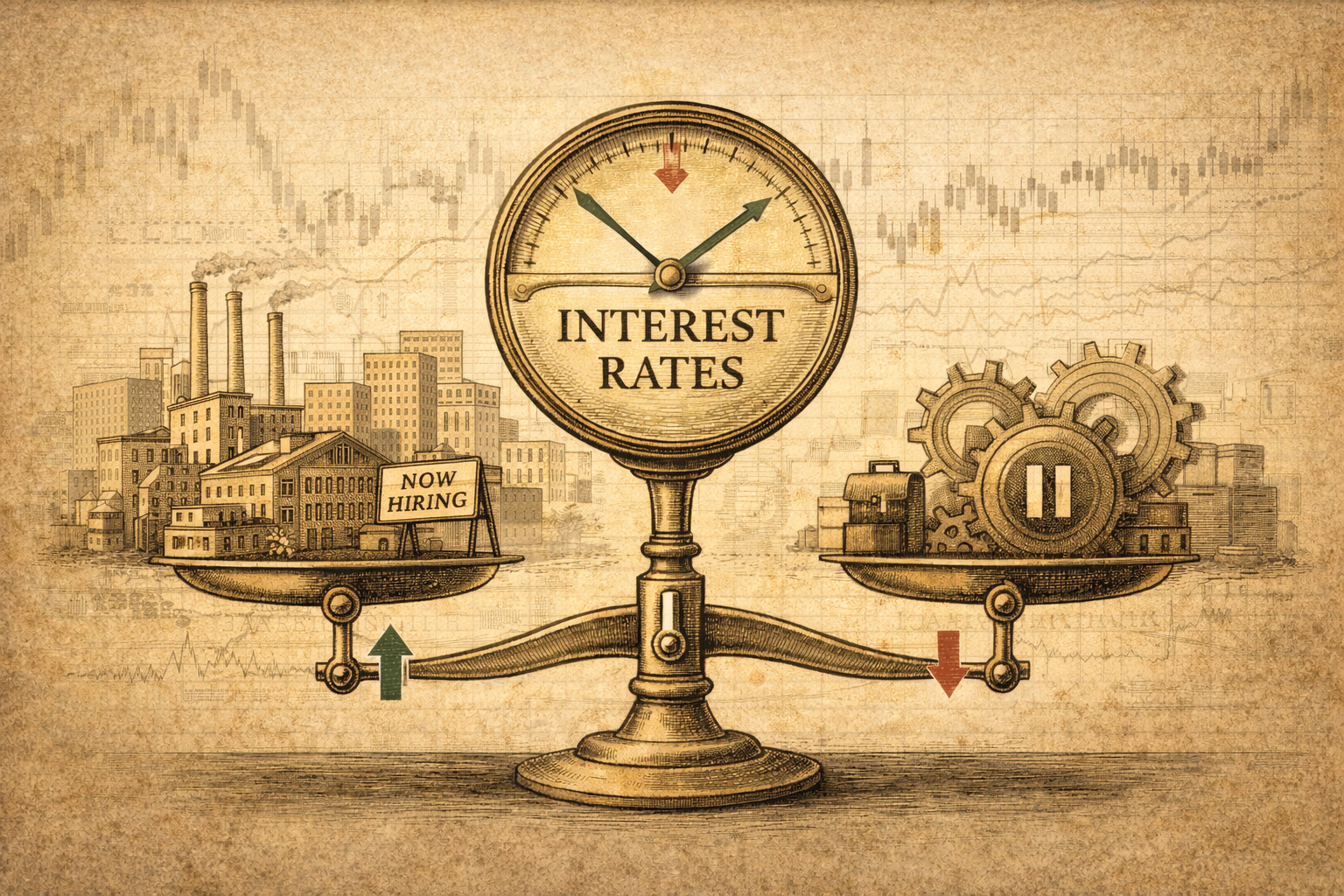
Although interest rates are frequently described as technical financial instruments in financial jargon, they actually serve as silent decision-makers throughout the economy. They determine who should be hired, when businesses should grow, and how secure employees feel about their jobs over time. In a similar vein, interest rates serve as a gauge of the “price” a borrower must pay to use an asset now.
In order to understand why they are important and what leaders like you should be aware of and anticipate from it, we analyze a number of its aspects in this article.
- What actually occurs?
- Why This Matters
- The Big Picture Gets Bigger
- What It Means for Young Leaders
- What Is There in the Future?
- Key Takeaways
What Really Happens In Business?
Interest rates are set by central banks, such as the US Federal Reserve or other national central banks of various countries, to manage inflation and economic growth.
Over the past few years, many central banks raised interest rates sharply to control high inflation caused by supply disruptions, increased demand, and global uncertainties.
Recently, there has been growing discussion about whether rates should remain high, be reduced, or stay unchanged, as economies show mixed signals.
In many sectors, higher interest rates slowed business growth and hiring, while in some other sectors they exposed persistent inflation, especially in areas like housing and service sectors.
While interest rate decisions may sound technical, they directly affect how businesses operate and how secure jobs are with them.
Why This Matters For Business
In other words, interest rates act as the price of money. When you borrow some money, you pay this to your lender as a fee for the borrowings. When you save money, you get this as a reward for your act. When rates change, the cost of borrowing and the reward for saving change across the entire economy. For businesses and workers, it may bring different aspects of change. We note here the three most important ones for each category.
For businesses, it is quite evident that higher interest rates make loans more expensive. Therefore, business expansion, people hiring, and new investment decisions slow down. And consequently, the cash flow becomes more critical for operation.
For workers, there is a subordinate effect. The organizations become cautious about hiring, and salary hikes may slow down. Also, the job security can weaken in rate-sensitive industries.
In short, interest rates quietly influence business confidence and employment decisions.
The Big Picture Gets Bigger
Besides these, when the interest rates are low, 1] businesses borrow more easily, 2] startups raise capital faster, 3] companies expand operations, and in addition, hiring increases.
On the contrary, when interest rates are high, borrowing becomes costly, and therefore, businesses delay projects. Also, while companies focus on efficiency instead of expansion, investors demand more profitability over growth.
Usually, central banks raise rates to control inflation, but if they keep the rates high for too long, it can slow down economic growth. If they lower the rates too quickly, however, it can cause inflation to rise again. This balancing act demands high patience, and that categorically explains why interest rate decisions are closely watched by markets, businesses, and executives alike.
What It Means for Young Leaders
You may easily understand that for young professionals, managers, and founders, interest rates shape the environment in which their careers grow.
While working in organizations, managers may face tighter budgets, project allocations, and higher work pressure to improve productivity.
While starting up, founders may find fundraising harder, and they may need clearer business models that help predict greener pictures. Leadership teams must interpret these policy signals carefully. They must balance growth ambitions with operational risk.
The employees may notice slower promotions and higher expectations from the business. The job seekers, the future employees, may need to focus on the development of skills that improve efficiency and real-time impact to remain in force.
Historically, it is observed that periods of high interest rates often reward professionals who can 1) manage costs of products and services they deal with, 2] Improve processes they employ, and 3] deliver measurable value to the customers in the long run.
What Is There in the Future?
Most economists expect interest rates to remain a key topic throughout the year. Central banks will watch a few indicators, such as inflation trends, employment data, consumer spending, and, of course, global economic stability.
Businesses will continue adjusting hiring plans based on these signals. A gradual easing of rates could revive hiring and investment, while prolonged high rates may keep companies cautious about their business and operations.
Key Takeaways
In a nutshell, interest rates influence financial borrowing, new investments, and hiring decisions.
Higher interest rates slow down business expansion and job market growth. On the contrary, lower interest rates encourage investment and employment
Young leaders like you should focus on skills that add efficiency and value to the organization. Keeping a close watch on the rate trends helps you anticipate job market changes and facilitate your decisions.