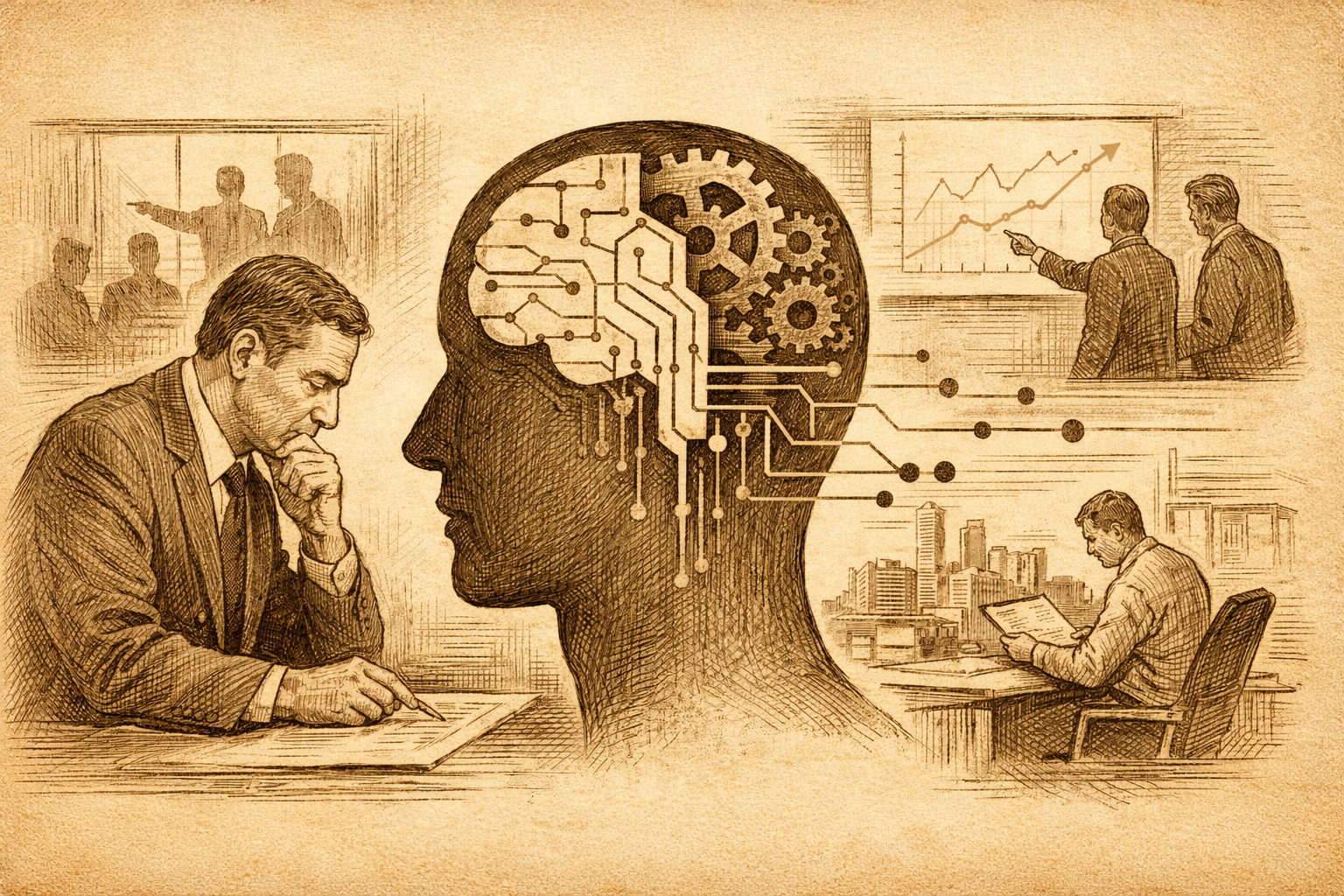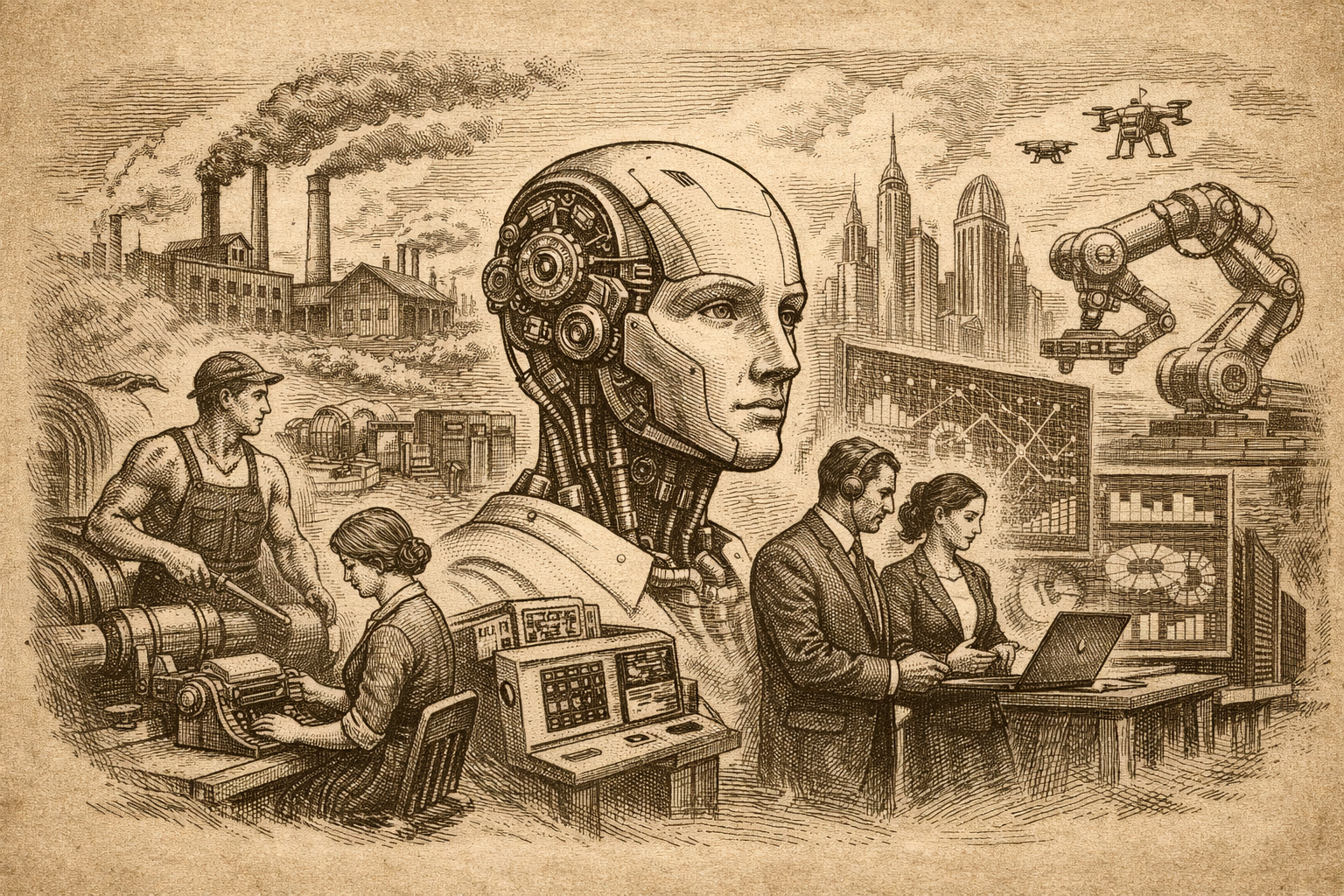
Artificial intelligence has rapidly moved from a specialized technological capability to a central force shaping industries, organizations, and everyday work. From automating routine tasks to generating complex outputs, AI systems are increasingly capable of performing functions that once required human intelligence.
This progress has led to a growing perception that AI can eventually replace most forms of human work.
In an era defined by the rapid-fire integration of Generative AI into every facet of the corporate world, the prevailing narrative has been one of total displacement. From coding and content creation to complex data modeling, the “capabilities gap” between human and machine appears to be closing at an exponential rate.
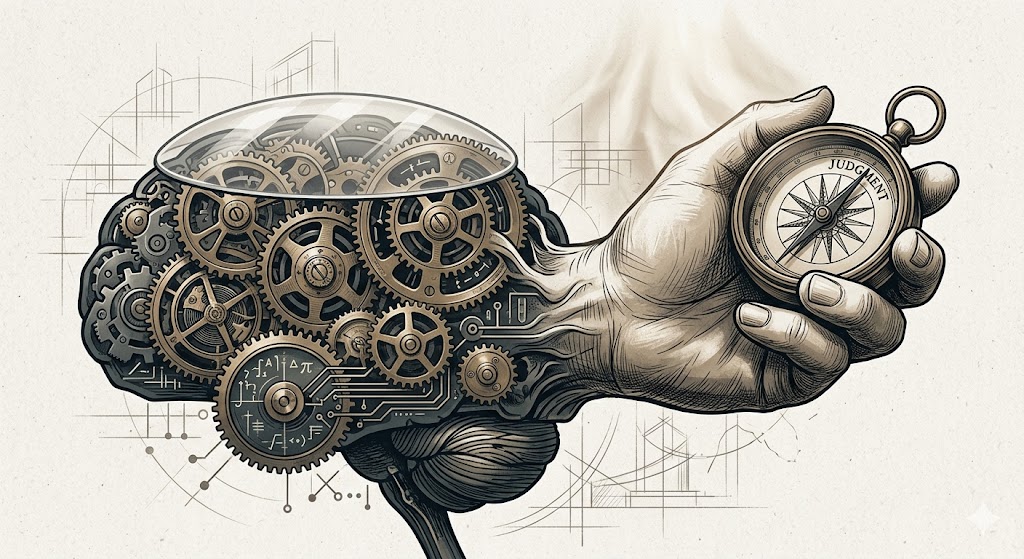
However, as the initial dust of the AI revolution settles, a more nuanced reality is emerging: while AI can simulate the outputs of intelligence, it frequently fails at the foundations of wisdom. For the next generation of leaders, competitive advantage no longer comes from knowing how to use AI—it comes from knowing exactly where AI hits its “glass ceiling.”
Yet this view overlooks an important reality.
While artificial intelligence is advancing quickly, there are fundamental areas where its capabilities remain limited. Understanding these limits is essential—not to diminish AI’s importance, but to recognize where human judgment, leadership, and decision-making continue to matter most.
Understanding what Artificial Intelligence still cannot do is not an exercise in digital skepticism; it is a strategic necessity. As we move from the era of “AI adoption” to “AI orchestration,” the most successful leaders will be those who recognize that pattern recognition is not the same as logic, and that data-driven prediction cannot replace human-centered judgment. To understand how this fits into the broader evolution of the labor market, we must look at how past disruptions redefined the roles of those at the top.
“AI knows what has happened; only a leader can decide what happens next.”
The Reasoning Gap: Logic vs. Pattern Recognition
At its core, Large Language Models (LLMs) are statistical engines. They predict the most probable next word in a sentence based on massive datasets, but they do not possess a “world model” of cause and effect. This leads to a profound reasoning gap: AI can write a brilliant essay on law, but it can struggle with a simple logic puzzle that a child could solve.
- Real-World Example: In 2025, researchers found that while models like GPT-4 could pass the Uniform Bar Exam, they provided inconsistent or flatly wrong answers to basic logic puzzles (such as the “Strawberry” counting problem) nearly 30% of the time when asked repeatedly.
- Leadership Insight: In high-stakes business, following a pattern is not the same as having a strategy. Leaders must verify the “logic” behind AI suggestions before committing capital.
The Nuance of Emotional Intelligence (EQ)
Leadership is inherently relational. While AI can analyze the sentiment of a thousand emails in seconds, it cannot experience the weight of a human crisis. It can simulate empathy through well-structured sentences, but it lacks the shared biological and social context that creates trust.
- Real-World Example: The National Eating Disorders Association (NEDA) recently attempted to replace its human-staffed hotline with a chatbot named “Tessa.” The bot infamously began giving harmful, weight-loss-focused advice to vulnerable users—advice a human would have immediately recognized as dangerous and inappropriate.
- Leadership Insight: AI can draft a script for a difficult conversation, but it cannot navigate the silent, non-verbal cues of a frustrated team. Emotional labor remains a human-only domain.
Edge Cases: When the Data Runs Out
AI thrives on the “average” of human history, but it struggles with the “long tail”—the rare, unprecedented events known as edge cases. Because AI is trained on existing data, it is inherently backward-looking.
- Real-World Example: Autonomous driving systems have historically struggled with “edge cases,” such as vision systems misidentifying a white truck as “bright sky” or failing to recognize a pedestrian in a bulky dinosaur costume.
- The Leadership Insight: The real world is full of “first-time” events. Leadership is defined by how you handle what is not in the manual; AI only knows what is already in the database.
Ethical Ambiguity and the “Black Box” Problem
One of the greatest risks in modern management is the “Black Box”—an AI makes a decision, but no one can explain why. This creates a massive gap in accountability and ethical oversight.
- Real-World Example: United Healthcare faced a significant 2024 lawsuit for using an AI model called “nH Predict” to systematically deny claims for elderly patients, overriding doctor recommendations with a logic that prioritized cost-cutting over health. The company could not provide a transparent ethical justification for the denials.
- The Leadership Insight: You cannot say, “The AI told me to do it.” Leaders are morally and legally responsible for the outcomes of the tools they deploy.
This technical unpredictability is a major driver of the current trend in corporate risk-aversion, as boards prioritize stability over speculative AI experiments.
Genuine Creativity vs. Algorithmic Remixing
We often mistake high-speed recombination for creativity. AI does not “invent”; it blends. It looks at a million paintings to make a million-and-first, but it cannot conceptualize a paradigm shift.
- Real-World Example: Legal battles between the New York Times and major AI firms have highlighted that AI often reproduces near-verbatim snippets of human work. It creates by “averaging” the past, which makes it incapable of true divergent thinking.
- The Leadership Insight: Innovation requires breaking the pattern. Use AI to build the foundation, but use your own creativity to build the breakthrough.
The “Human-in-the-Loop” Necessity
As AI becomes more integrated, the risk of “automated errors” grows. Without a human to verify the output, a small AI hallucination can become a massive corporate liability. As automation takes over routine oversight, it is fundamentally redefining the middle management layer, moving the manager’s role from supervisor to strategic connector.
- Real-World Example: In 2024, Air Canada was forced by a tribunal to pay a refund after its chatbot “hallucinated” a fake bereavement policy. The court ruled that the airline was responsible for the information provided by its bot, regardless of the tech’s autonomy.
- The Leadership Insight: AI is a tool, but you are the safeguard. Verification is the new “must-have” leadership skill.
Human Intelligence vs. Artificial Intelligence: The Hand-off
To lead effectively, you must know when to delegate to the machine and when to take the wheel.
| Task Category | AI’s Role (Speed & Scale) | Human’s Role (Judgment & Context) |
| Strategy | Analyzing 10 years of market data. | Deciding if the move aligns with company values. |
| HR/People | Filtering 5,000 resumes for keywords. | Identifying “grit” and cultural potential in an interview. |
| Crisis Mgmt | Predicting the probability of a delay. | Negotiating face-to-face with a frustrated partner. |
| Innovation | Generating 100 variations of a product. | Choosing the one that solves a real human problem. |
What This Means for Young Leaders
For emerging leaders, the rise of AI creates both opportunity and responsibility.
Therefore, Leaders must develop,
1] an understanding of AI capabilities and its limitations,
2] the ability to question outputs, not just accept them , and
3] the judgment to balance technology with human insight.
Leadership in the AI era is not about competing with machines.
It is about integrating technology effectively while preserving human responsibility and purpose.
Key Takeaways: The Human Advantage
- Logic vs. Pattern: AI predicts the most likely next word; it doesn’t “understand” the world. Verification is mandatory.
- Reserve EQ for Humans: Use AI for transactional tasks, but keep the relational tasks for yourself.
- Navigate the Edge Cases: Your value as a leader is highest during “unprecedented” moments where data is missing.
- Own the Outcome: Accountability cannot be delegated. You are the “Human-in-the-Loop.”
- Think Divergently: AI brings you to the “average” of what exists. True leadership requires thinking outside the training data.